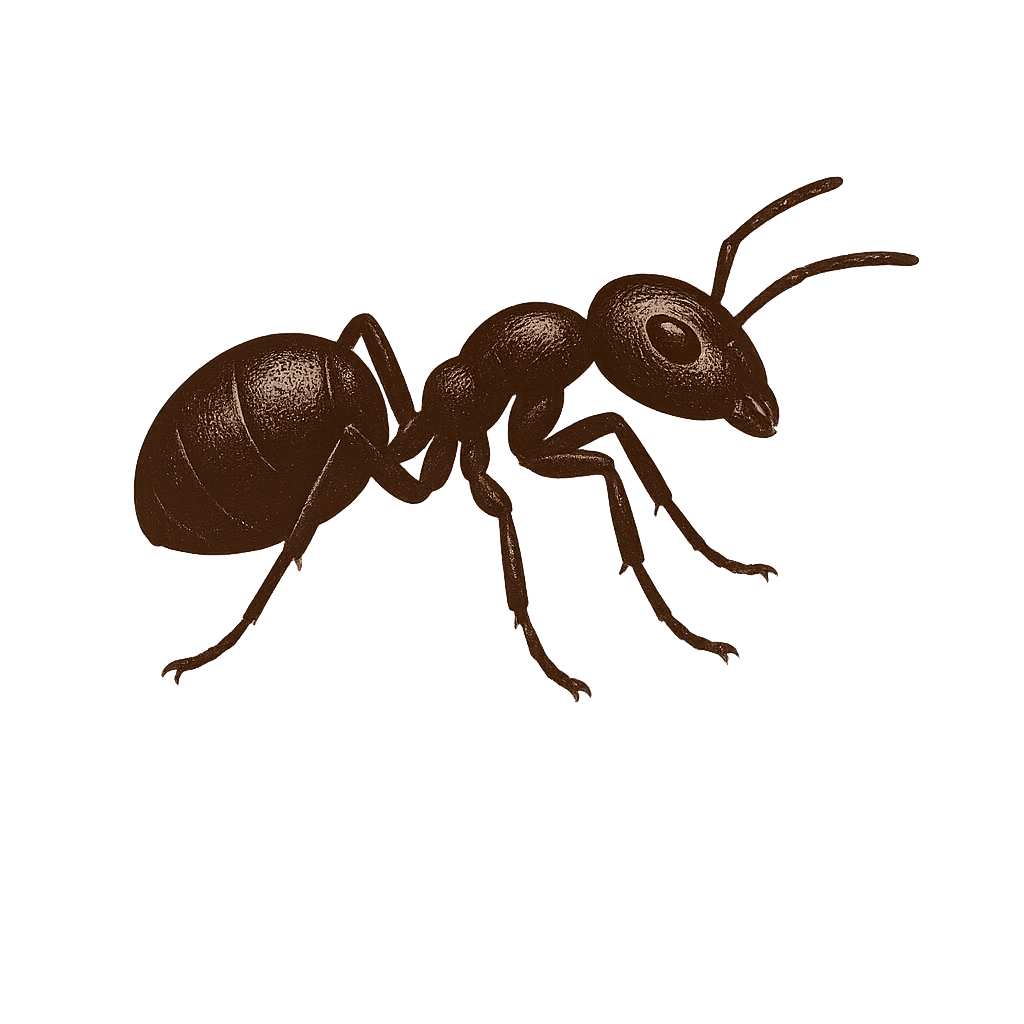
Army Ant
Eciton Burchelli
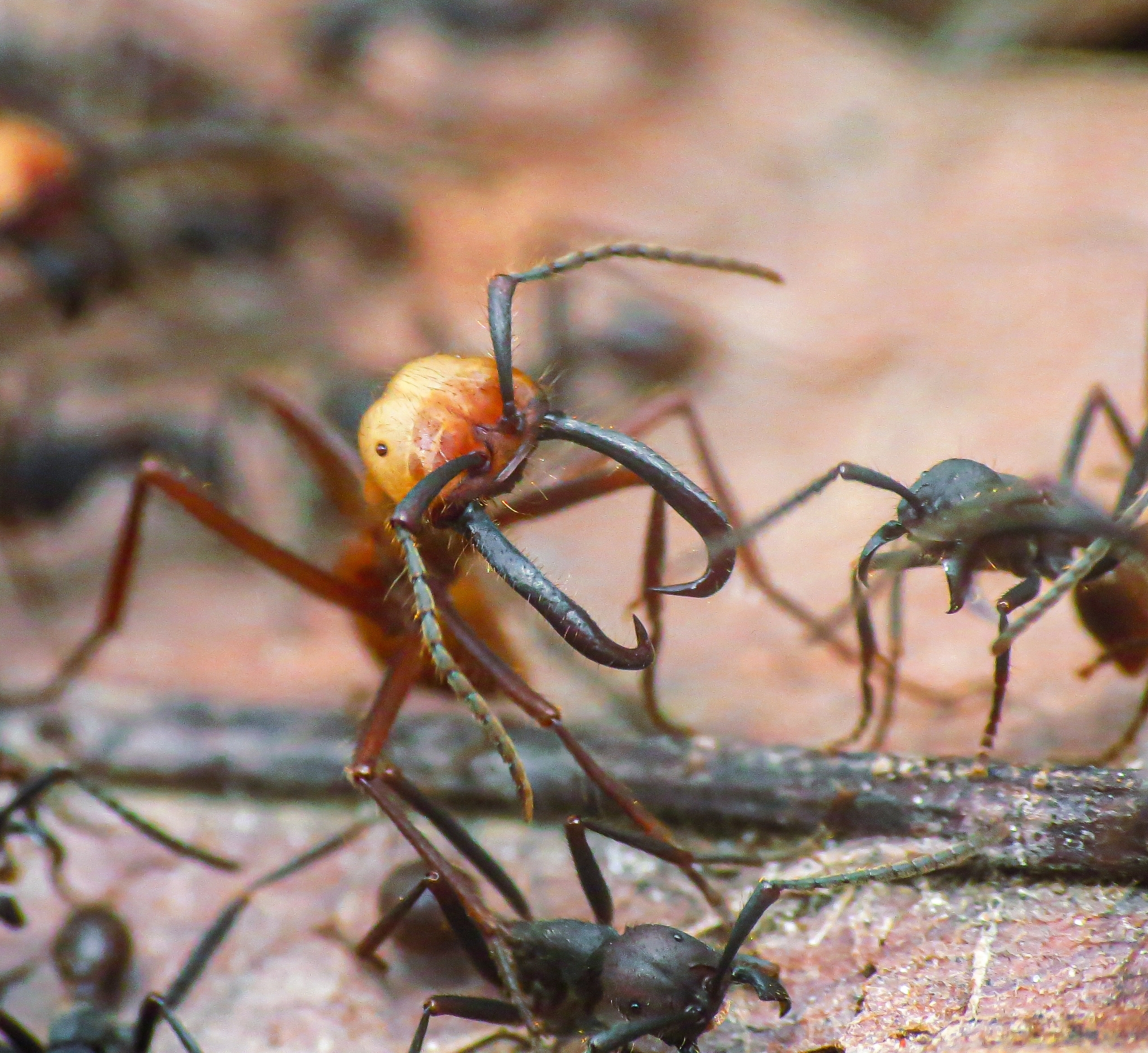

- Color: Minors; black with dark brown abdomens Majors; light yellow with darker abdomen
- Worker size: 3 - 7 millimetres
- Colony size: 2 million
- Queen: 30 millimetres, claustral, monogyne
Introduction
The army ant, the most famous species being eciton burchellii, is an extraordinarily fascinating ant that makes extremely large colonies whose sizes go up to 700,000, but can go into the millions. The males have wings in order to go and mate with other queens while the soldiers have extremely large heads, larger bodies, and large hooked mandibles. Army ants typically have elongated bodies. The army ant’s queen uniquely does not have wings! Male army ants have wings in order to mate with queens. Instead of mating in nuptial flights, the queens just sits somewhere and the males come to her.
Unique Traits
Infantry Power
Army ants aren’t dangerous to humans, but if the human is unable to escape a large swarm, they can be killed by the ants. Army ants don’t have a very painful sting, with a rating of 1.5 on the Schmidt sting pain index, being compared to having a cut on your elbow stitched by a rusty needle. They are famous for their large numbers up to 20 millions depending on species, thus earning the name “army ants”. They also form massive raid columns that they use to obliterate everything in their path. Other ants, larger reptiles and/or mammals, nothing is safe. Unlike the bullet ant, when army ants attack, they attack in an orderly and organized manner.
Defences
The majors of an army ant colony have large heads, large bodies, and hooked mandibles.These qualities make it an extremely powerful ant, even individually. The army ants are aggressive when hunting or when defending. Army ants can defend against attackers by evacuating the nest, blocking the nest entrances, or direct combat. Army ants can be pretty aggressive as they are nomadic, not having a permanent nesting area. When attacking, army ants will use their mandibles like scissors to slice their prey, then spread acid to dissolve the muscles and flesh into liquid, which they then drink. Army ants are actually mostly blind, meaning that if their prey doesn’t move, they might actually survive, but this is unlikely.
Habitat & Diet
Army ants are commonly found in Central America, South America, Asia, and Africa. Army ants like eciton burchellii located in the Americas are new world army ants, while species in Africa and Asia like driver ants are old world army ants. They can be found in deserts, mountains, tropical forests, rainforests, and more. Army ants are carnivorous, and mainly eat other ants. This is because, due to the nomadic nature of the army ants live in, the only truly sustainable food source is other ants. Army ants eat small insects, beetles, small invertebrates, and in rare cases, young birds as well.
Sources:
- https://www.anywhere.com/flora-fauna/invertebrates/army-ant
- https://www.nhm.ac.uk/discover/schmidt-pain-index-insect-stings.html
- https://study.com/academy/lesson/army-ants-facts-types-life-cycle.html
- https://pmc.ncbi.nlm.nih.gov/articles/PMC3014660/
- https://www.terminix.com/ants/army/
- https://www.orkin.com/pests/ants/army-ants
- https://www.britannica.com/animal/Eciton-army-ant