
Big Headed Ant
Pheidole Megacephala
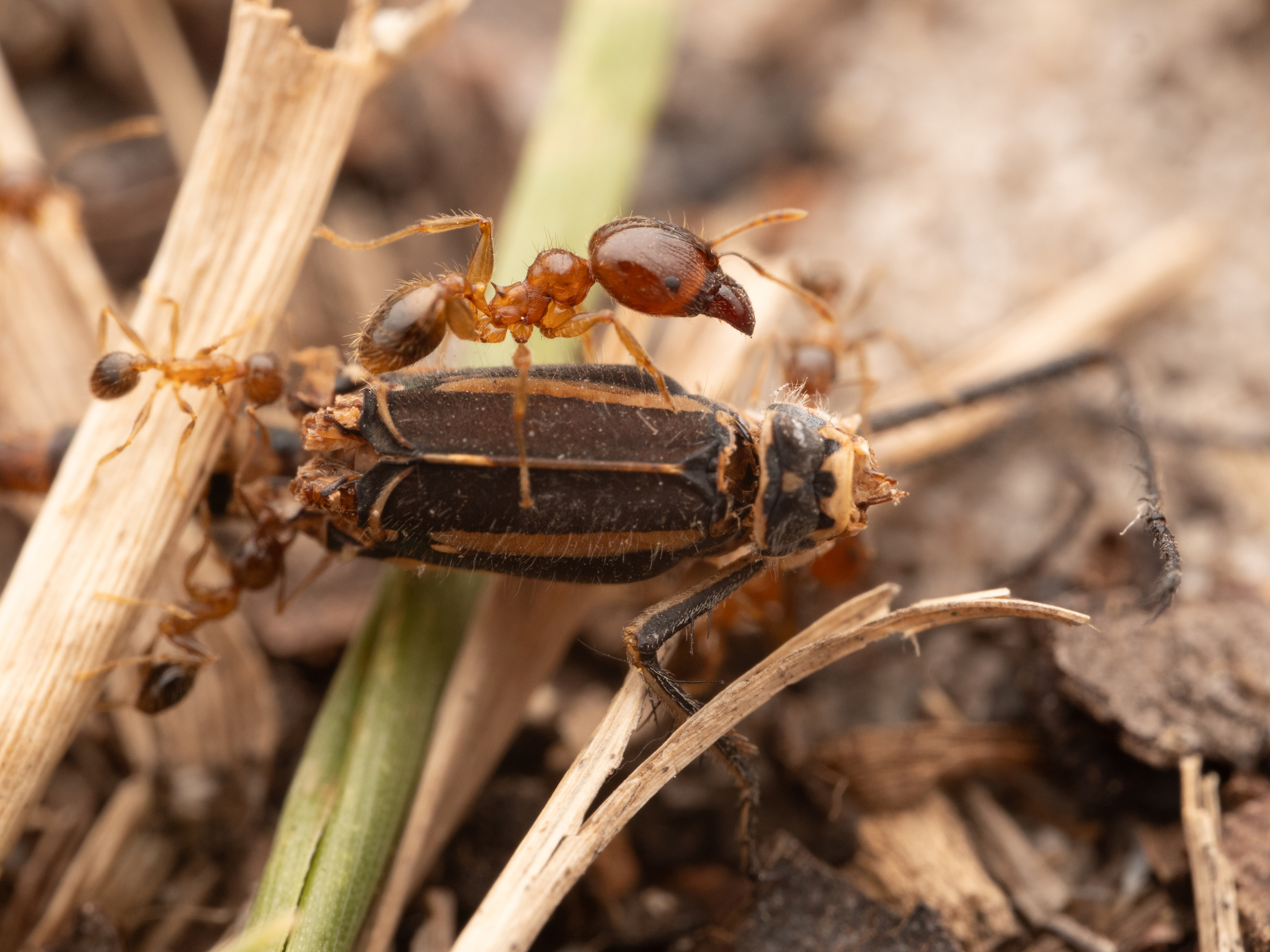

- Color: Light-brown, reddish-brown
- Worker size: 1.5-4 millimetres
- Colony size: thousands - hundreds of thousands
- Queen: 6-8 millimetres, polygynous, can form supercolonies,
Introduction
Big-headed Ants are a very interesting ant species that lives up to their name. Big-headed Ants have two worker castes: Minor workers, who are 1.5 - 2 mm in length. There are also major workers who are 2.5 - 4 mm in length. The major worker’s job is to crack seeds. They are light brown to reddish brown. They nest in soil under stones and logs, and sometimes they build mounds. Big-headed Ant queens are mostly 6-8 cm long.
Unique Traits
Muscle Heads
Big-headed Ants have big heads, which can be part of an essential role in protecting the colony. The big heads are packed with muscles. These muscles make the jaws very strong and help with colony defence, nest growth, and holding large food items.
Defences
They have big heads that are packed with muscle and have a huge biting force to attack enemies. Their huge jaws also aid them in attacking and crushing others. Big-headed Ants overwhelm their prey in great numbers. Although their bite is crushing to ants, it is mild and harmless to humans.
Habitat & Diet
These ants are native to tropical areas of Africa. This ant is also invasive, so now it is present in tropical and subtropical areas all over the world. These ants eat insects and honeydew. They tend to insects that feed on plants for their honeydew.
Sources:
- https://www.imperialpestprevent.com/post/understanding-big-headed-ants-habits-health-risks-and-prevention
- https://www.orkin.com/pests/ants/bigheaded-ants
- https://www.fullscopepestcontrol.com/facts-about-bigheaded-ants/#:~:text=Big-headed%20ants%20get%20their%20name%20from%20the%20distinctively,appearance%2C%20but%20it%20serves%20an%20essential%20practical%20purpose.
- https://professionalpestmanager.com/pest-control-ants/in-focus-big-headed-ant/
- https://antastic.com.au/product/pheidole-sp-big-headed-ant/#:~:text=Reviews%20(25)-,Care%20Level:%20Easy,few%20months%20of%20having%20workers.