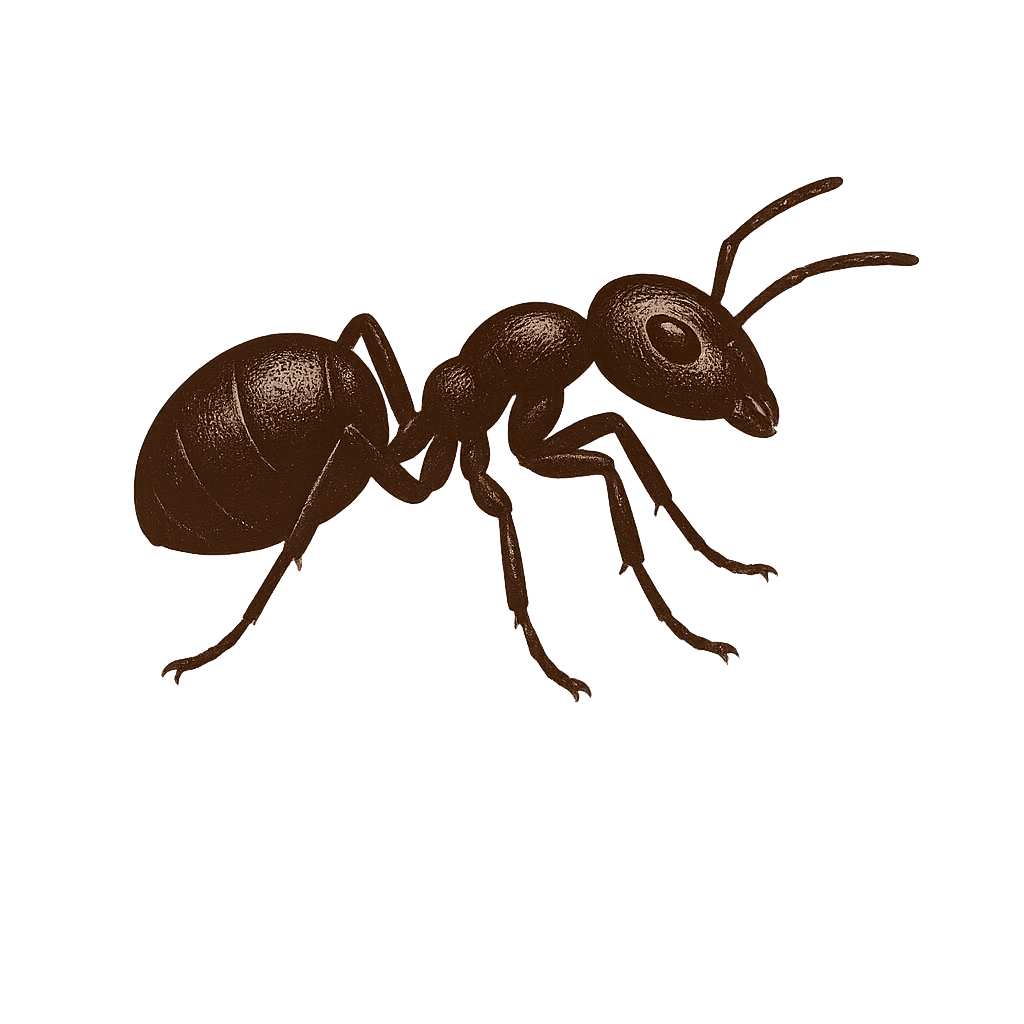
Black Garden Ant
Lasius Niger
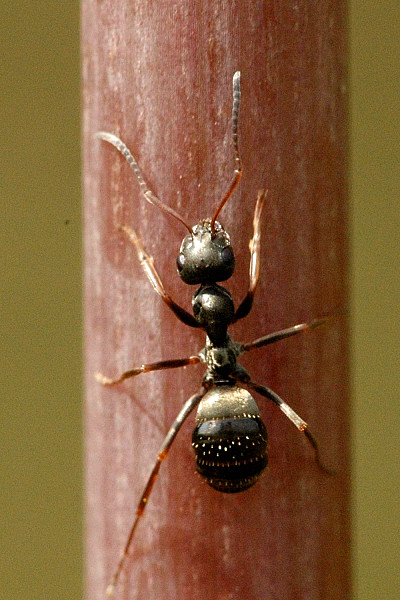

- Color: Black
- Worker size: 3.4-5 millimetres
- Colony size: up to 50,000
- Queen: 8-9 millimetres, claustral, monogyne, sometimes pleometrosis
Introduction
The black garden ant (lasius niger), is a very common ant that is extremely easy to keep as pets. Their colonies can reach a size of up to 7000, but sometimes can reach tens of thousands! This species of ants are monogynous, meaning they are only capable of having one queen per colony. Sometimes, they may be confused with lasius neoniger, the American equivalent, however, neoniger has a pointed abdomen while lasius niger do not.
Unique Traits
Climate Change Extinction
The black garden ant with a size of 3-5 mm. They are monomorphic, meaning that they do not have majors or supermajors, however, over time, the average worker size increases . Each ant is a worker and a major. The are considerably aggressive towards anything that looks like a threat, which can displace native ant species in North America. This is very different from ants like carpenter ants or asian marauder ants, which are polymorphic. They nest under things. Logs, rocks, anywhere that can offer protection. Queens are long lived, with the oldest recorded dying at the age of almost 30 years.
Defences
The black garden ant defends itself with mandibles and formic acid. The spraying is not as long ranged as species such as the red wood ant (formica rufa). The average lasius niger ant bite can’t always be felt by humans. They can swarm opponents but aren’t an extremely strong species. Unlike ants from driver ants or army ants whose swarms can reach up to 20 million, the black garden ant swarms can’t really reach more than a few thousand. The power of lasius niger colonies mirror the power of other common ant species, like pavement ants.
Habitat & Diet
Lasius niger are native to most European countries, but can be found in North America as well. As stated before, Lasius niger is a considerably aggressive ant species, outcompeting native species. They have a diet consisting of sugars and protein. They get the sugar by using aphids that secrete honeydew. They have a mutualistic relationship with these aphids, where they protect aphids from predators, and get the honeydew in return. They can “milk” these aphids by tapping on aphid butts, like urging them to secrete the honeydew.
Sources:
- https://antkeepers.com/pages/care-sheet-lasius-niger
- https://en.wikipedia.org/wiki/Black_garden_ant
- https://www.antnest.co.uk/lasius-niger/
- https://antmaps.org/