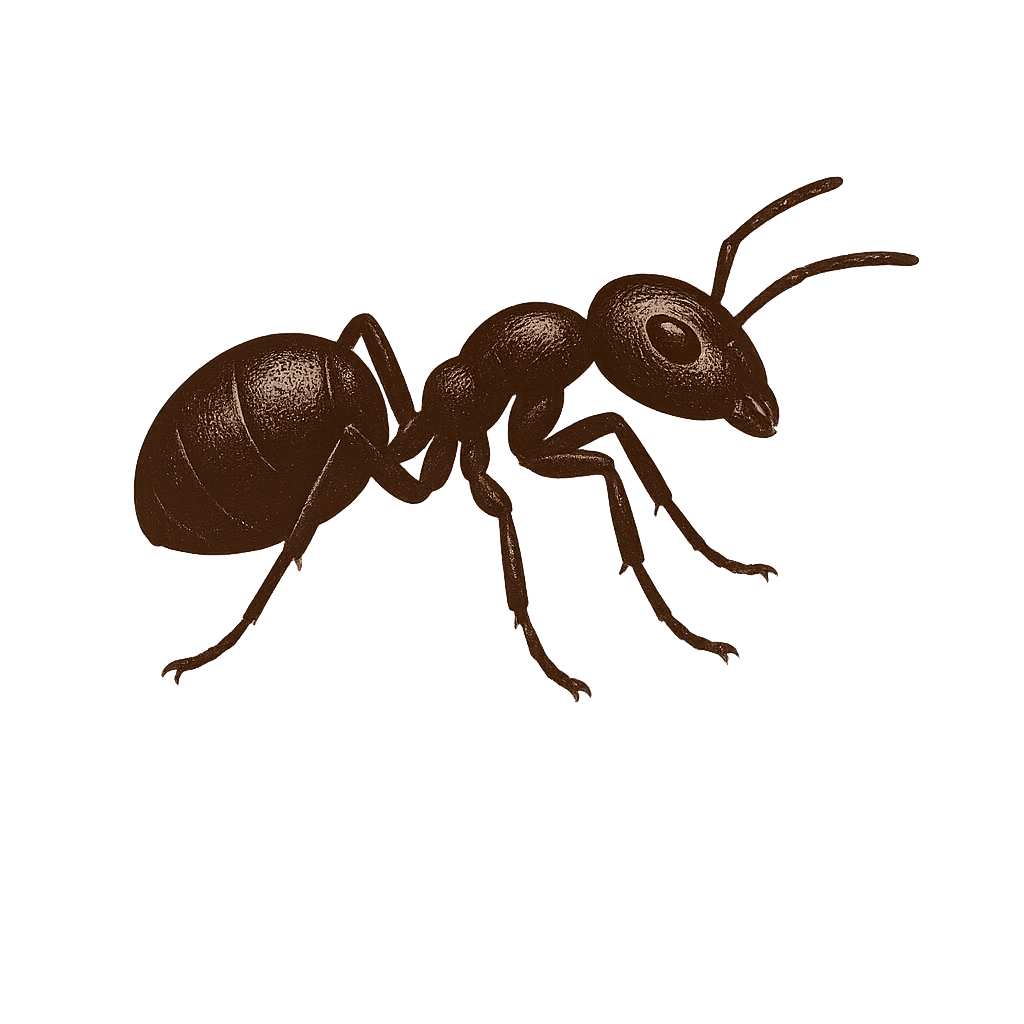
Bullet Ants
Paraponera Clavata
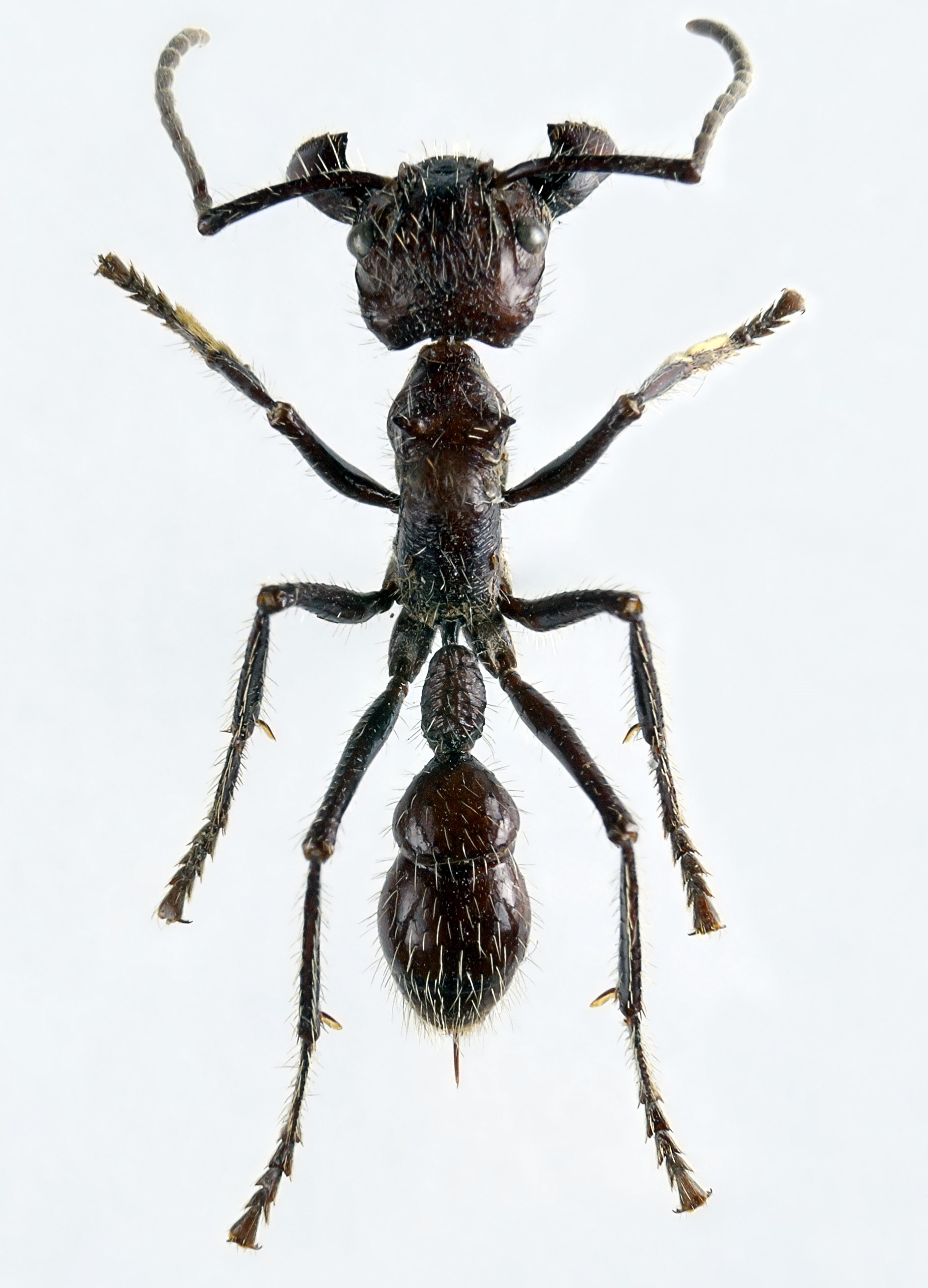

- Color: Black
- Worker size: 2.5 centimetres
- Colony size: several hundred - a few thousand
- Queen: 25 - 30 millimetres, semi-claustral, monogyne
Introduction
Paraponera Clavata, more commonly known as the Bullet Ant, is one of the world's most famous species of ants, and for good reason. It has one of the most painful stings, and it is extremely large for an ant, up to 2.5 cm for a worker. The queen is a little larger than the workers. To some, a Bullet Ant may resemble a wingless wasp (which exists). They have a colony size of 300 to a few thousand, not a lot, but for these powerful ants, it's more than enough.
Unique Traits
Insect Giantesses
The bullet ant is extremely large at around an inch, a gargantuan size in the insect world. If the average ant (around 7 mm) is the size of an average human, (170 cm), a bullet ant would be around 6 m to 7 m. The bullet ant is well known for its sting. It is rated beyond the maximum 4 on the Schmidt sting pain index. The pain is described as “Pure, intense, brilliant pain. Like walking over a bed of charcoal with a 3 inch nail embedded in your heel”. You can know you are looking at a bullet ant if it has wide antennas and a slender body shape.
Defences
The Bullet Ant will defend its nest fiercely if needed. When attacked, they swarm the enemy and sting it multiple times, delivering deadly amounts of toxin to the enemy. This is most likely fatal to the victim. This deadly sting comes from a toxin known as Poneratoxin. Before stinging, they also bite and latch onto the victim by biting, and once they are securely latched on, they turn over, and sting. They employ the same tactics when attacking other ants. Latch and sting. The large mandibles, while not as recognized, also deliver a fair share of pain.
Habitat & Diet
Bullet Ants are located in the vast, humid rainforests of Central and South America. If you want to see them, Costa Rica is a country filled with Bullet Ants. Due to their location being in tropical forests, this means that they can eat plant nectar and other tropical animals like dead insects, other ants, small invertebrates, grasshoppers, katydids, and beetles. They rarely eat invertebrates like frogs.
Bullet Ants hunt solo. They can hunt both on the ground and also in the treetop canopies. They can easily access the canopies as their nest is usually located and places such as the base of trees. When a Bullet Ant encounters prey, they can sting them to paralyze their prey. Different ants do different tasks, however, and only the older, more experienced ants go out hunting.
Sources:
- https://www.bestantsuk.com/post/bullet-ants-understanding-their-habitat-and-behaviour
- https://bugbrief.com/bullet-ant
- https://www.orkin.com/pests/ants/bullet-ants
- https://www.britannica.com/animal/bullet-insect
- https://www.anywhere.com/flora-fauna/invertebrates/bullet-ant
- https://www.nhm.ac.uk/discover/schmidt-pain-index-insect-stings.html