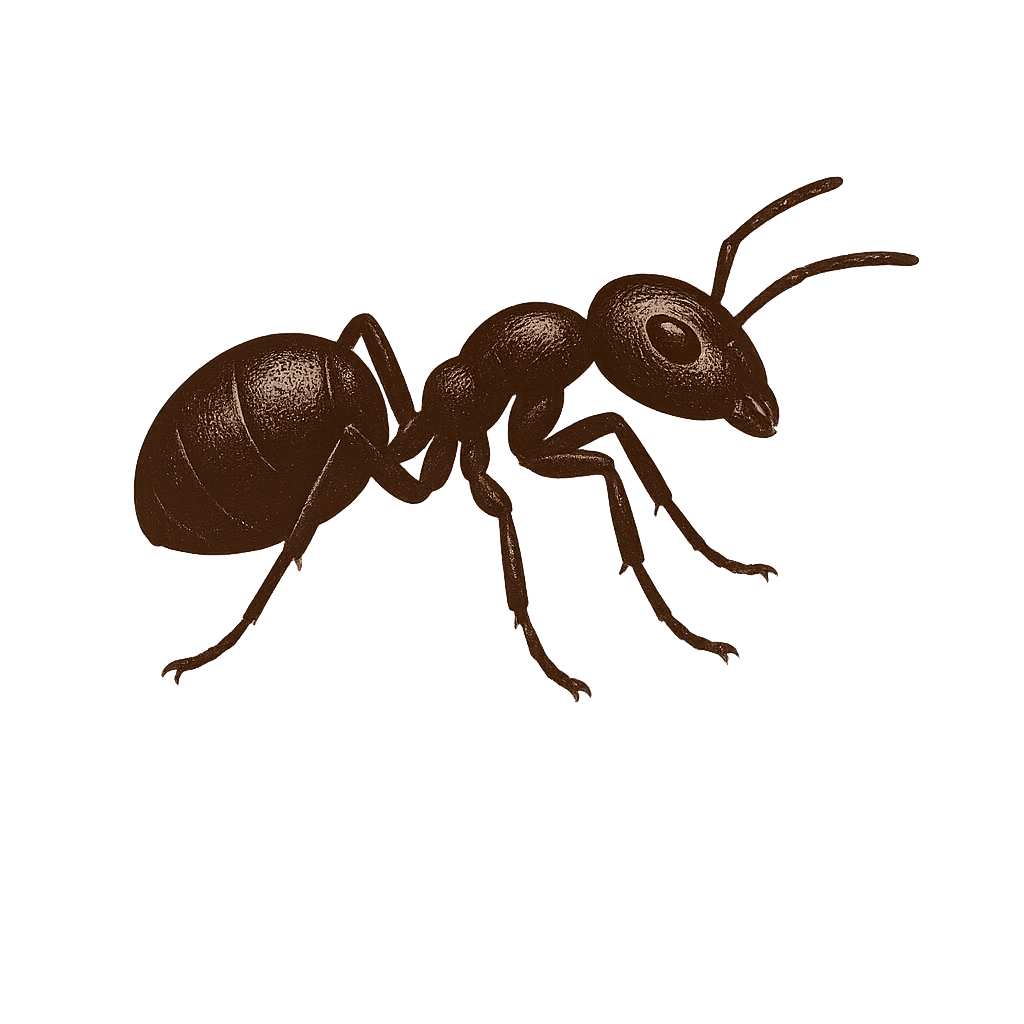
Carpenter Ant
Camponotus Pennsylvanicus
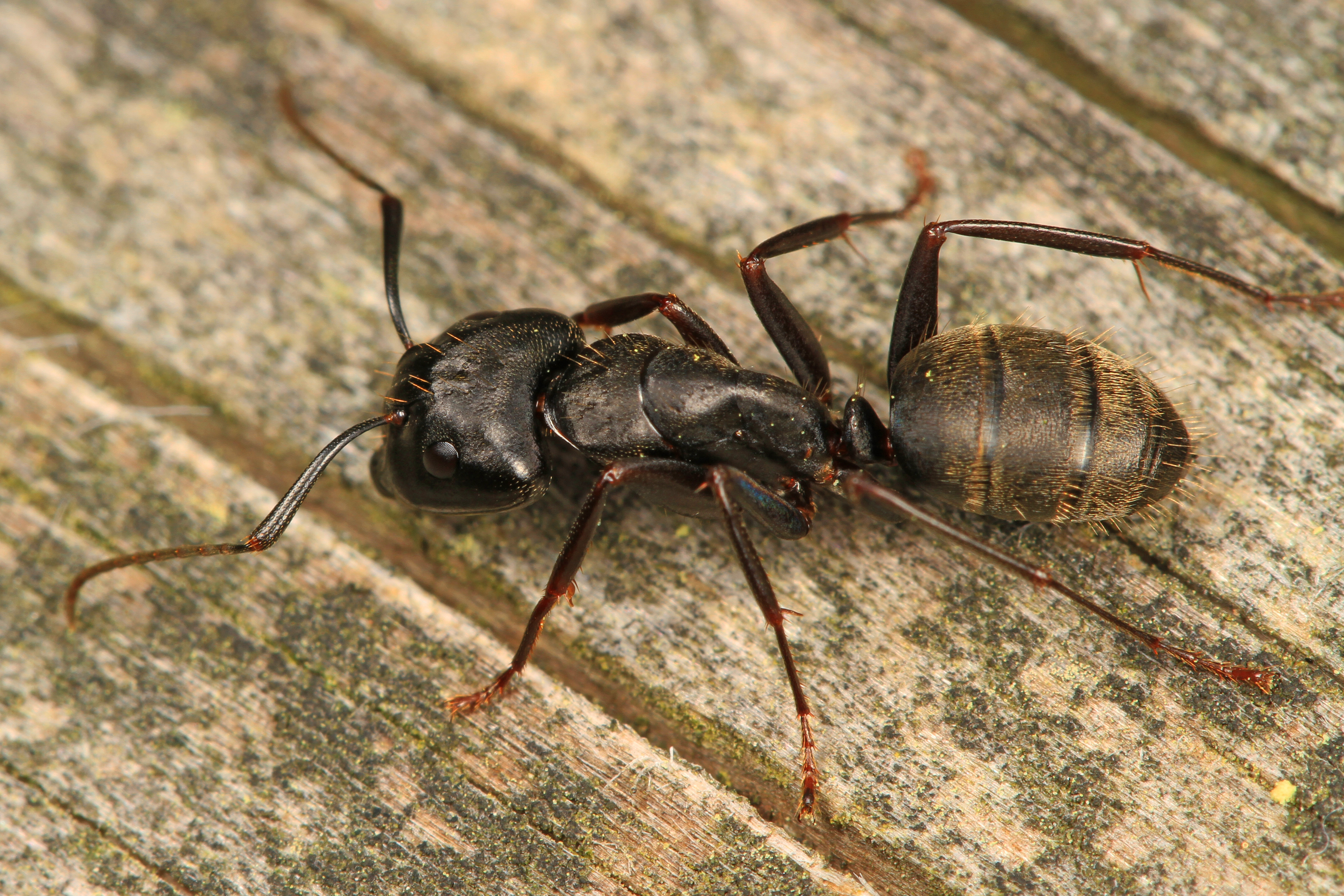

- Color: Black
- Worker size: 6 - 25 millimetres
- Colony size: up to 100,000
- Queen: 25 millimetres, claustral, monogyne
Introduction
Carpenter ants are one of the most common types of large ants found in the world. They have a large variety of sizes ranging from 6mm (workers) to 25mm (queens). The workers have a thin, kite-shaped thorax. Usually, a mature colony consists of around 3000 adult ants but in some cases, a colony can have up to 100,000 ants. Some species of carpenter ants can easily take some wood from your house and use it to build their nest, or just live in the wood instead. However, only a small number of carpenter ants do this, so don’t randomly kill them just because they’re carpenter ants. If you see them in your house, you should use diatomaceous chalk and cinnamon for defence against them. In fact, you should use them for every pest ant species.
Unique Traits
Interesting Ants
The genus camponotus is the largest genus of ants in the world, containing over a thousand species and even more subspecies. Carpenter ant queens can reach up to an inch long while supermajors, the largest worker ants, can reach 13+ mm. They have 3 segments, a heart shaped head, a slim thorax (workers), and a bulbous abdomen. You can easily differentiate a carpenter ant from a termite by seeing if its antennas are bent. Carpenter ants have bent antennas while termites have straight ones. Carpenter ants are infamous for their ability to damage wood structures, but this does not mean all species of carpenter ants are pests.
Defences
Carpenter ants can spray formic acid onto their enemies in order to drive them back. They also may use their mandibles to bite into their enemies, and inject formic acid into the bite. If this happens to a human, it may create a feeling that the bitten part is burning, but the bite does not actually pose a health risk or issue to humans. Carpenter ants use the same technique when attacking enemies, biting into them and injecting acid to kill them.
Habitat & Diet
Carpenter ants can be found near spaces with rotting, dead, or moist wood. This is because they need the wood to build their nests. That’s why they have strong mandibles. A key difference between carpenter ants and termites is that carpenter ants do not use the wood they get as a food source, instead using it as a building material like humans. Due to their habit of taking wood from structures, they can be considered pests and can damage infrastructure if left unattended. Carpenter ants are omnivorous, and can and will eat plants and animals alike. In their natural habitats, they will eat insects dead or alive. If they live in or near your house, they will eat whatever you do.
Sources:
- https://www.canada.ca/en/health-canada/services/pest-control-tips/carpenter-ants.html
- https://ohioline.osu.edu/factsheet/HYG-2063#:~:text=Carpenter%20ants%20may%20be%20identified,the%20abdomen%20(Figure%202).
- https://www.nps.gov/articles/carpenter-ant.html
- https://pmc.ncbi.nlm.nih.gov/articles/PMC5383563/
- https://www.terminix.com/ants/army/
- https://www.pestworld.org/pest-guide/ants/carpenter-ants/