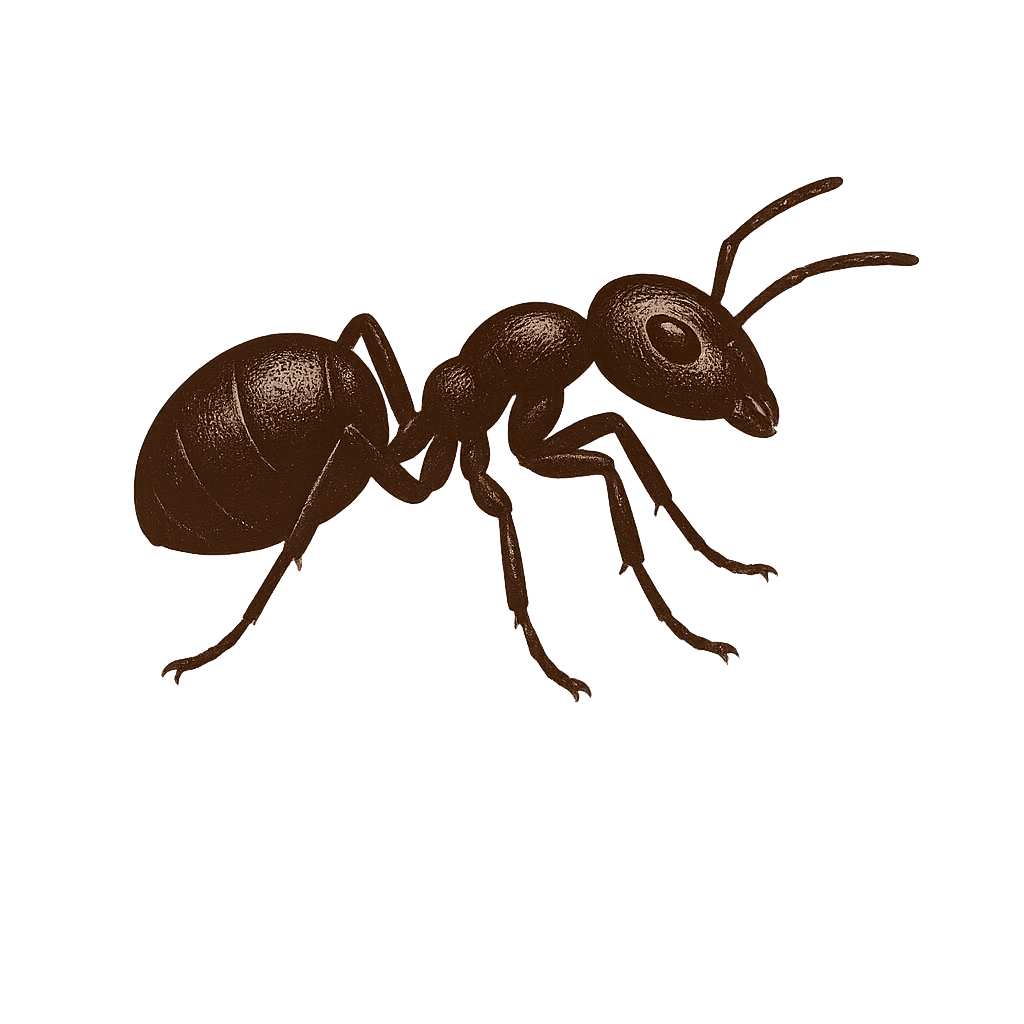
Driver Ant
Dorylus Nigricans
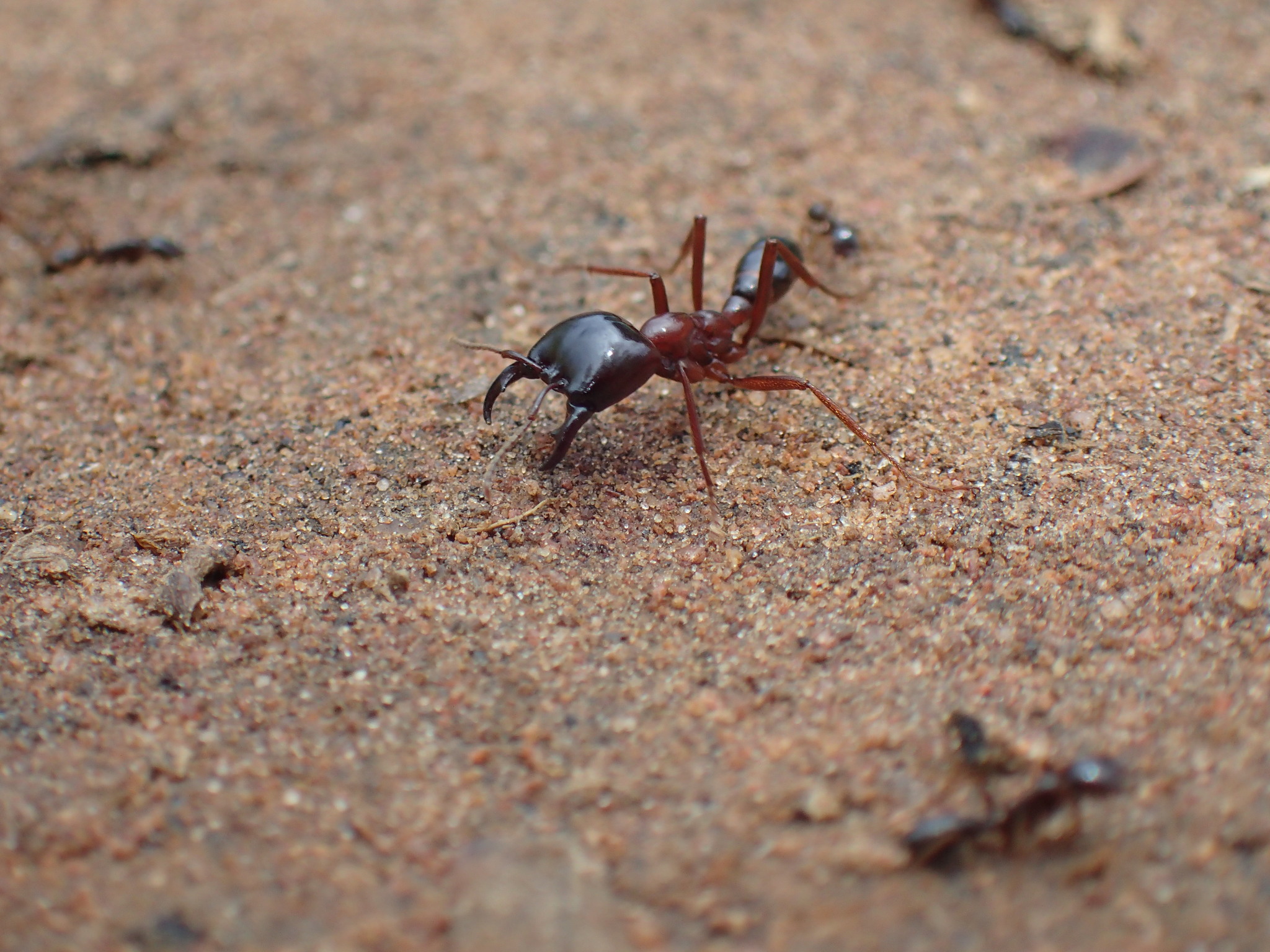
- Color: Black, reddish-brown
- Worker size: 2.5-12 millimetre
- Colony size: 2,000,000-22,000,000
- Queen: 4 centimetres, budding, monogyne
Introduction
Driver ants of the species Dolyrus are a species of large ants found in southern Africa and tropical Asia, with the largest queen ant in the world. Driver ant queens are capable of reaching 7cm or more. The workers, however, are a more average size, similar to the size of black carpenter ant workers.
Unique Traits
Armies
Driver ants are extremely similar to the new world army ant.. They both live a nomadic lifestyle, changing nesting spots day by day. Not only that but both are virtually blind, only able to see using pheromones. An interesting part about driver ants is the alates. They aren't completely different from what you’d expect an ant should be. The abdomens are elongated and a red-ish color. These alates are sometimes known as sausage flies, because of the resemblance.
Defences
The main defense of the driver ant is the mandibles of the ants. The soldiers have an extra large head, similar to those of Pheidole soldiers. This large head powers the mandibles, making each soldier a large threat to other bugs. The soldiers can also sting, but they rarely use it. The driver ants also swarm their enemies, and when I say swarm, I mean swarm. 20 million ants in a swarm to be exact. This is an extremely impressive feat. Most ant colonies can’t even reach 1 or 2 million, small ants included, who are supposed to have a larger number of ants. Each bite leaves 2 puncture wounds. The bite is so powerful that you can use the head as stitches by letting one bit you to seal the wound on the skin, and twisting off the head
Habitat & Diet
The driver ant lives in southern Africa, the grasslands and humid areas, to be exact. As stated before, they do not have a permanent home, and are nomadic. Their diet is mostly the same as most other ant species, to some extent. Unlike other ant species, however, they are carnivorous. Their main food sources are insects, arachnids, and earthworms, but they can eat larger animals if they are injured, and unable to escape.
Sources:
- https://www.britannica.com/animal/driver-ant
- https://www.inaturalist.org/taxa/135301-Dorylus
- https://academic.oup.com/aesa/article-abstract/67/6/877/46769