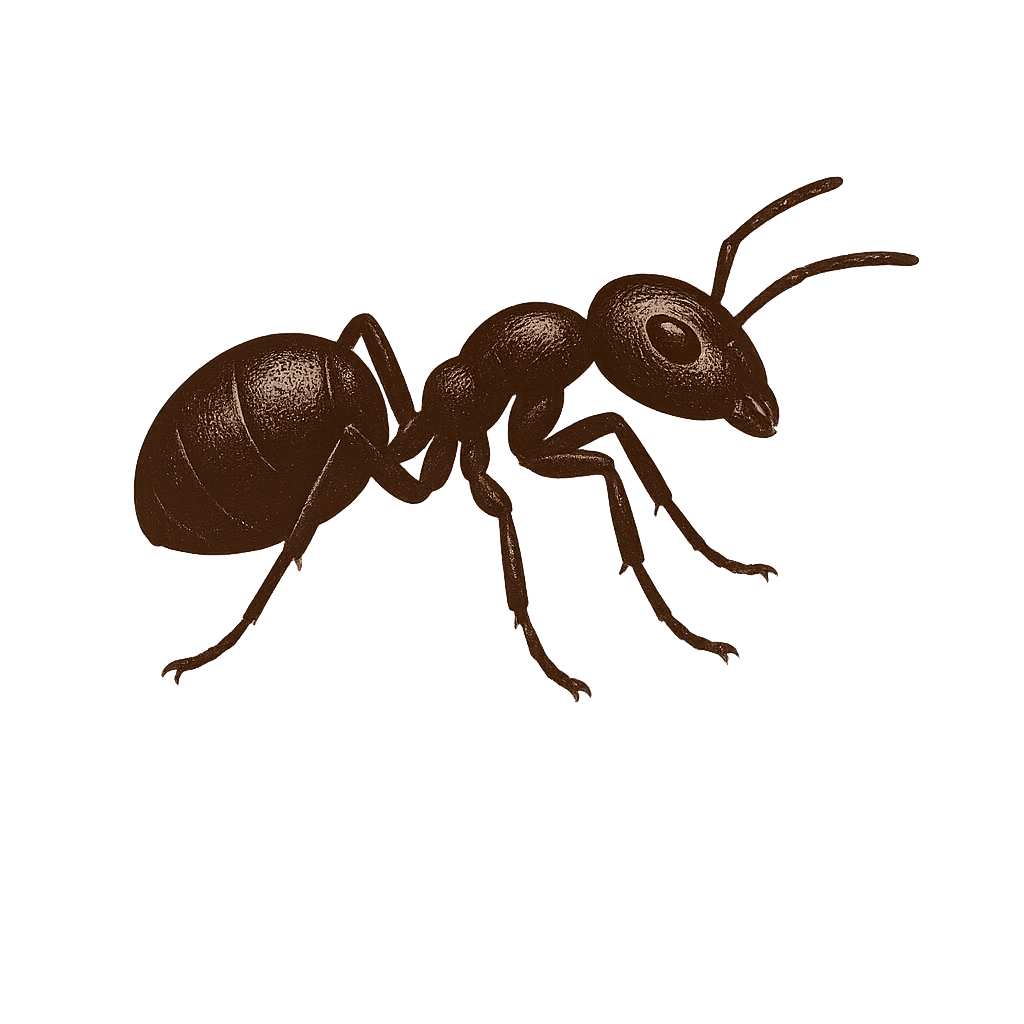
Fire Ant
Solenopsis Invicta
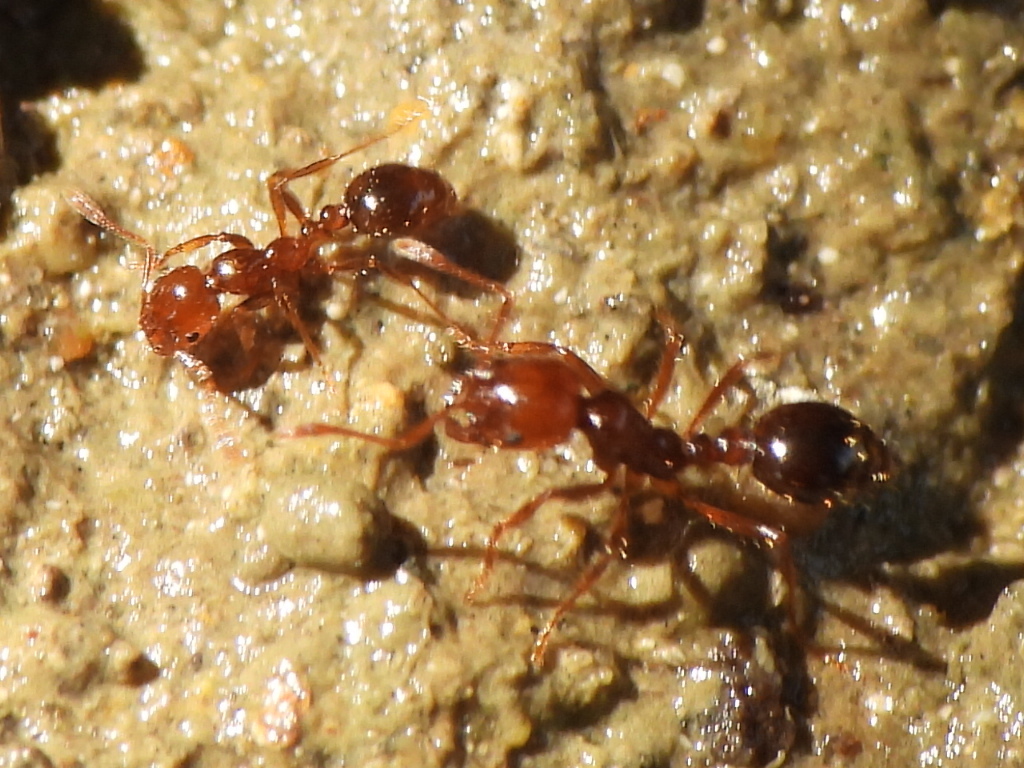

- Color: Reddish-brown - black
- Worker size: 1/8 - 1/4 inches
- Colony size: 100,000 - 500,000
- Queen: 6 - 8 millimetres, claustral/parasitic, monogyne & polygyne
Introduction
You (probably) have a lot to learn about Fire Ants. They are 1/8 - 1/4 inches in length, and reddish-brown and black in appearance. They build mounds of leaf litter and soil. These ants have colony sizes of around 100,000 - 500,000 ants. The worker caste is made up of major and minor workers. Major workers are more suitable for defence, while minor workers are better at caring for the brood. This is because major workers are bigger while minor workers are smaller. Their queens are bigger, often 6-8 mm in size, and reddish-brown. They often use pleometrosis.
Unique Traits
Painful Sting
Fire Ants are equipped with a painful sting. Both the minor and soldiers (major worker) have stings, but the soldiers have longer stings with more venom. These stings are mainly composed of solenopsin, the key to that painful sting.
Living Rafts
Fire Ants are one of the few species that can form living rafts. When water is about to flood a colony of Fire Ants, they link together and trap air bubbles, making a raft entirely made of ants. So, when the Fire Ant’s nest gets flooded, the queen can go onto the raft so the colony can float to dry land and make a new nest. They interlock using claws and jaws to make an incredibly dense raft.
Defences
Fire Ants have a painful sting to defend themselves. In humans, Fire Ant stings can have a variety of consequences. These ants swarm and attack prey, and are very aggressive when their nest is disturbed. They can also form living rafts when a flood comes.
Habitat & Diet
Fire Ants are native to South America, but they have been introduced to different parts of the world. They eat other insects, carrion, honeydew, plant matter like seeds, and nectaries (which are the glands of a plant that produce nectar). Major workers scavenge for dead animals and swarm and sting their prey. Their tendency to consume agricultural plants is part of why farmers hate these pests. They are also known to damage farmer's crops.
Sources:
- https://www.seattlechildrens.org/conditions/a-z/fire-ant-sting/
- https://pmc.ncbi.nlm.nih.gov/articles/PMC11673062/#sec5-biomolecules-14-01499
- https://www.ars.usda.gov/southeast-area/stoneville-ms/biological-control-of-pests-research/docs/imported-fire-ants/#:~:text=Imported%20fire%20ant%20colonies%20are,23%20days%20after%20egg%20laying.
- http://extension.msstate.edu/newsletters/bug%E2%80%99s-eye-view/2021/imported-fire-ant-workers-vol-7-no-5
- https://www.ant-shack.com/en-ca/blogs/ant-care-sheets-1/solenopsis-invicta-red-imported-fire-ant-care-sheet#:~:text=2.,live%20up%20to%207%20years.
- https://www.orkin.com/pests/ants/army-ants
- https://www.youtube.com/watch?v=hGGJKq_gQT8
- https://www.orkin.com/pests/ants/fire-ants/fire-ant-nests-hills-and-range
- https://www.youtube.com/watch?v=N_WlgFudDNg
- https://ant-pests.extension.org/what-do-fire-ants-eat/
- https://www.aphis.usda.gov/plant-pests-diseases/ifa#:~:text=Appearance,burning%20sensation%20and%20itching%20blisters.
- https://www.bio.fsu.edu/~tschink/publications/1983-1.pdf
- https://www.sciencedirect.com/org/science/article/pii/S1619003317000123#:~:text=It%20is%20native%20to%20South,(DeHeer%20and%20Tschinkel%201998).