Ghost Ant
Tapinoma melanocephalum
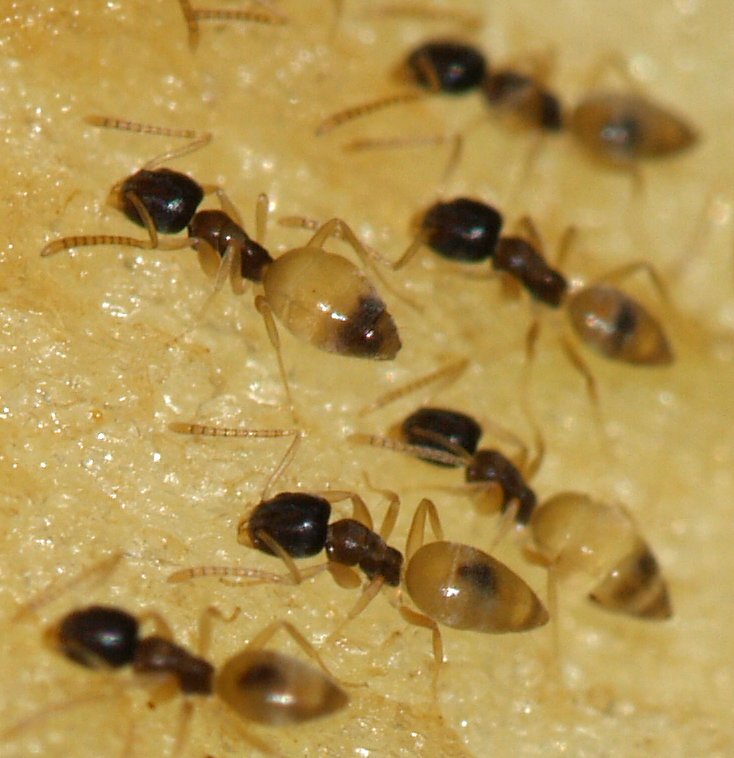

- Color: Black, with pale-white abdomen
- Worker size: 2 millimetres
- Colony size: 100-1000
- Queen: 30 millimetres, budding, polygyne
Introduction
The ghost ant's name comes from the color of its abdomen, which is a pale white color. However, the head and the thorax is a dark color. It is about 2mm large. They can move fastly and erratically, just like other ants such as the yellow crazy ant. They have a colony size ranging from 100-1000. They are polygynous. meaning they can have multiple queens in one singular colony. They have an unpleasant smell if you crush one, which you can use to try and find ghost ants if you have them in your home.
Unique Traits
Crazy Ghosts
Ghost ants are famous for their pale abdomens. This is because of the material their abdomens are made of, known as cuticles. This is an extremely thin and translucent substance. Due to light passing through, the abdomen gives off a white and pale coloration. They move like yellow crazy ants and black crazy ants. This is because they will move wildly, erratically, and seemingly without logic.
Defences
The ghost ants have special defenses, like moving seemingly randomly and quickly. This makes them a harder target to catch for predators. They also blend into some surfaces because of their white abdomens. This is especially prevalent in our own homes with our white walls. They also utilize their environment in order to defend themselves. They make their nests in the walls, making it harder to invade. However, that is all the defenses they have. They cannot bite hard enough to harm much of anything, let alone humans and predators. They also do not have any stingers, or any venom that can defend themselves. Once again, they’re only main defense is they’re environment they live in. If you want to get philosophical with this you can think of this as a metaphor for life. Most people only rely on the background of society, not themselves.
Habitat & Diet
Ghost ants build their nests in humid places. Such as logs, dirt, and more. In your home, they build their nests in cracks in your walls. Like many other animals, Ghost ants try to eat energy rich and calorie efficient foods. For ants, these foods are called honeydew. It's extremely sweet and energy rich and the perfect food for insects. They also eat fatty foods in order to supply themselves with all the nutrients they need. This translates to eating sweet things and sometimes grease in your house. Due to the lack of defensive and offensive power the ghost ant has, they don’t really hunt for any food, mainly relying on foraging for food.