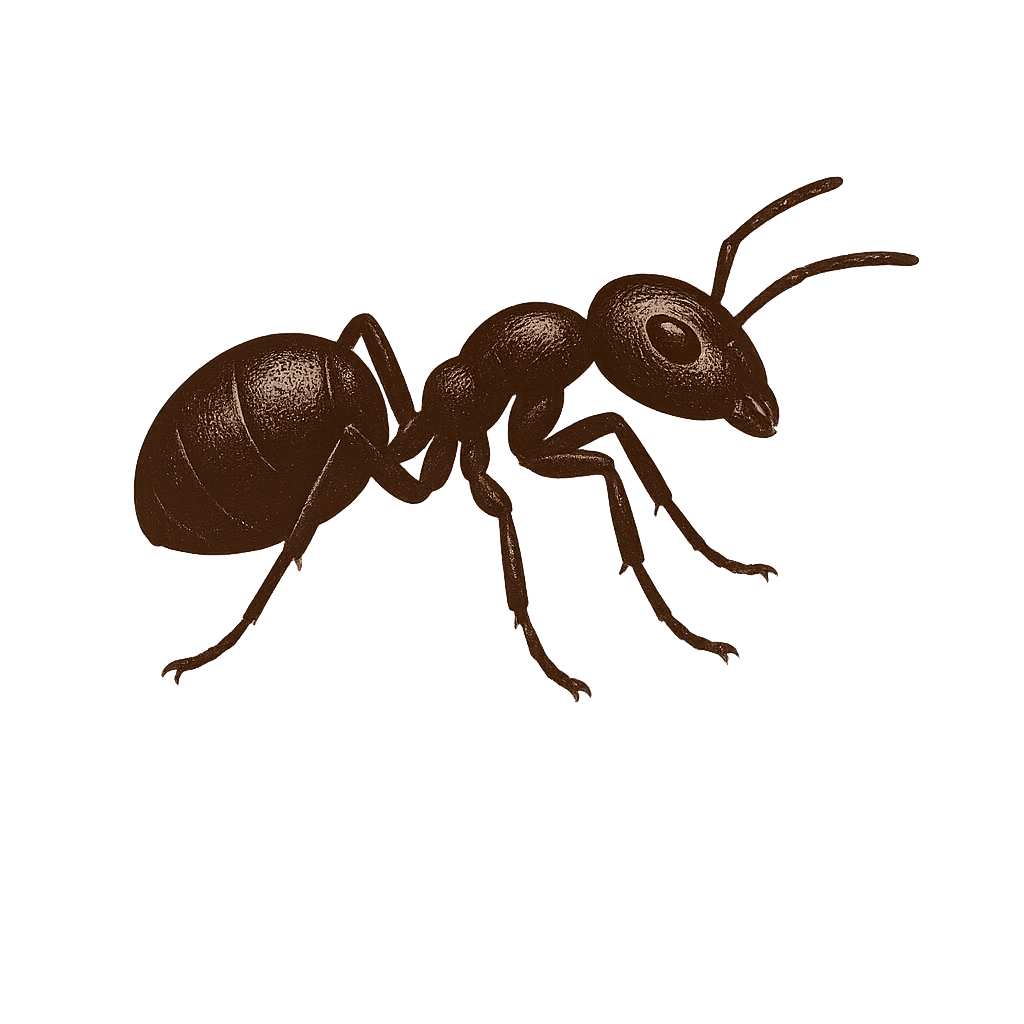
Giant Turtle Ant
Cephalotes Atratus
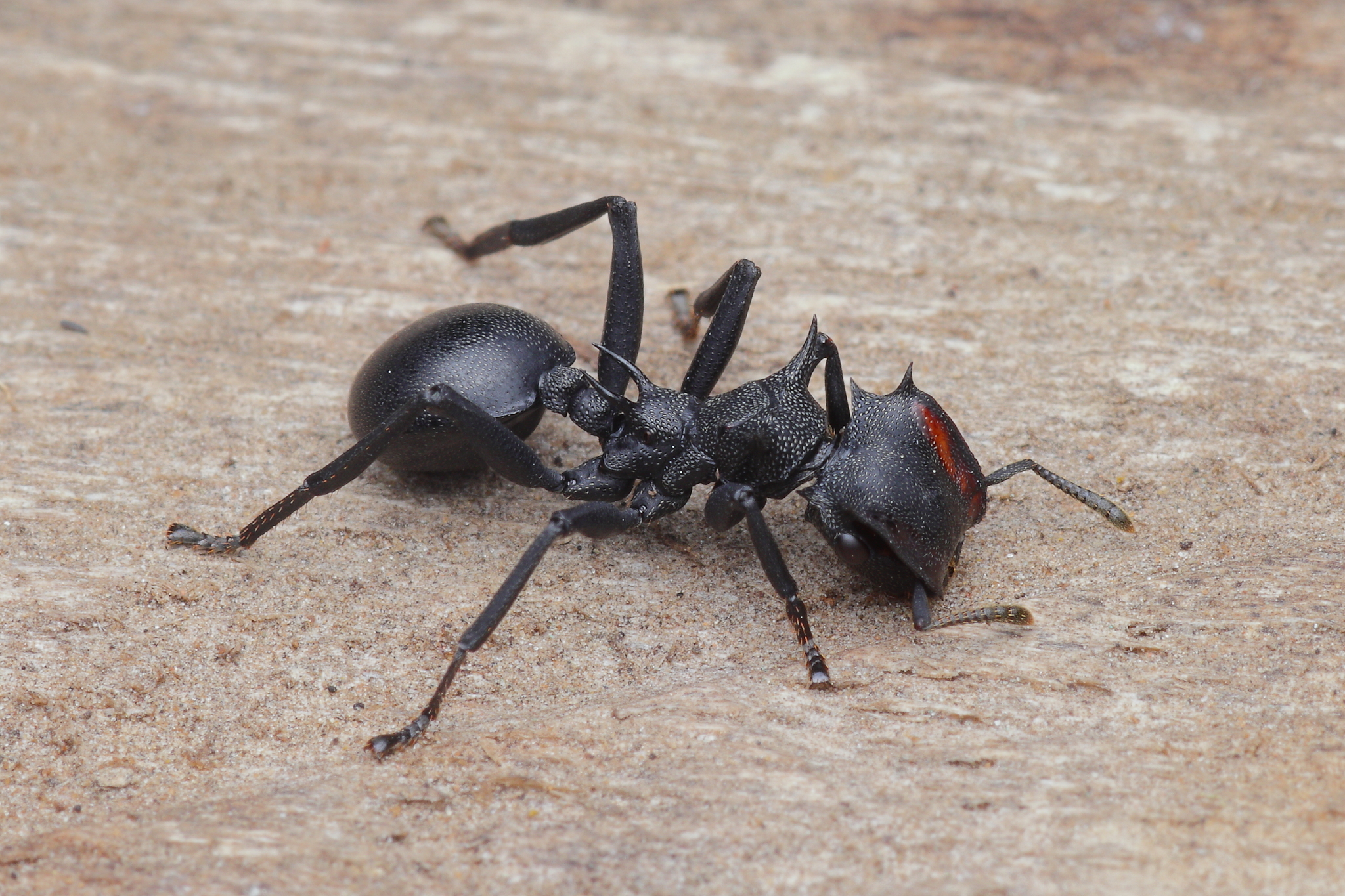

- Color: Silvery grey, black
- Worker size: 8-14 millimetres
- Colony size: several thousand
- Queen: 20 millimetres, cycles between monogynous and polygynous
Introduction
Turtle Ants have a silvery-gray appearance and are mostly 8-14 mm long. They have big heads and are also called “gliding ants”. They nest in already existing cavities in tree stems and branches. They choose their homes by making out which tree stems and branch openings can exactly fit the adult soldier ant’s head. They have a worker caste composed of workers and soldiers. Soldiers have big “plates” on their heads, compared to the smaller workers. The Cephalotes atratus queens are typically 2 cm long.
Unique Traits
Professional Parachuters
Turtle Ants can use their body to steer themselves to their tree trunk when they accidentally slip off a tree. Its flattened head helps it catch the air. It uses its limbs and head to steer itself to the tree trunk when it falls down. This behaviour is also seen in some other ant species. Unlike Cephalotes atratus, it glides abdomen-first, not head-first like other ants. Usually, these ants find a way to glide safely to a tree trunk.
Living Doors
Turtle Ant majors’ heads are shaped in a very different way. It is shaped to fit perfectly with the entrances of the nest to block anything from entering. It is very hard to dislodge because it fits perfectly. These ants’ heads are also sharp, making them work kind of like a screw, so that it is almost impossible to dislodge them.
Defences
Turtle Ants aren’t the most aggressive ant species out there. They lost their ability to properly bite and also to sting. They have reduced mandibles. This causes them to be at a disadvantage when competing with other ant species. Their defence of clogging the doors is a highly effective protective measure.
Habitat & Diet
Turtle Ants primarily inhabit South America, where they live in the more tropical areas. Turtle Ants have adapted to have a wide variety of food sources. They are mostly herbivorous and opportunistic feeders to escape interference competition. They eat pollen and extrafloral nectar as their main diet, although they also consume honeydew, fungus, and lichen.
Sources:
- https://pictureinsect.com/wiki/Cephalotes_atratus.html#:~:text=Species%20Status%20of%20Gliding%20ants,Turtle%20ants
- https://saraguitiprado.com/ant-page/cephalotes-atratus-gliding-ant/#:~:text=atratus%20%E2%80%93%20Gliding%20Ant-,Cephalotes%20atratus%20%E2%80%93%20Gliding%20Ant,know%20not%20to%20eat%20them.
- https://columbian.gwu.edu/turtle-ants-shielded-danger#:~:text=Turtle%20ants%20have%20an%20elaborate,his%20The%20Origin%20of%20Species.
- https://antmaps.org/?mode=species&species=Cephalotes.atratus
- https://www.sciencedirect.com/science/article/abs/pii/S0065280620300060
- https://drexel.edu/news/archive/2018/March/46-million-year-old-bacteria-kees-turtle-ants-surviving/#:~:text=%E2%80%9CThese%20ants%20have%20evolved%20reduced,branch%20nests%2C%E2%80%9D%20Russell%20explained.
- https://www.sciencedirect.com/topics/agricultural-and-biological-sciences/cephalotes
- https://strangeanimalspodcast.blubrry.net/2023/07/10/episode-336-the-turtle-ant-and-the-alien-butt-spider/#:~:text=Turtle%20ants%20have%20another%20ability,safely%20on%20the%20tree%20trunk.