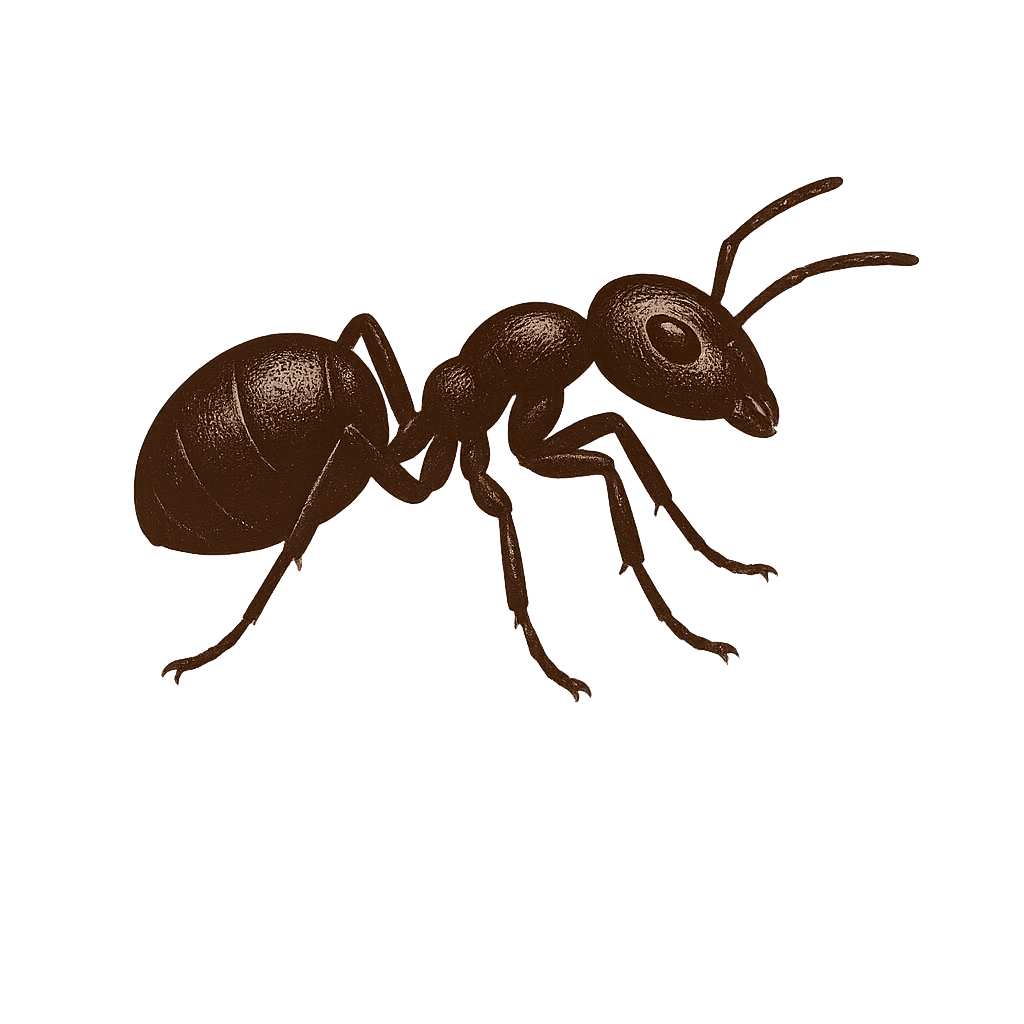
Jack Jumper Ant
Myrmecia Pilosula
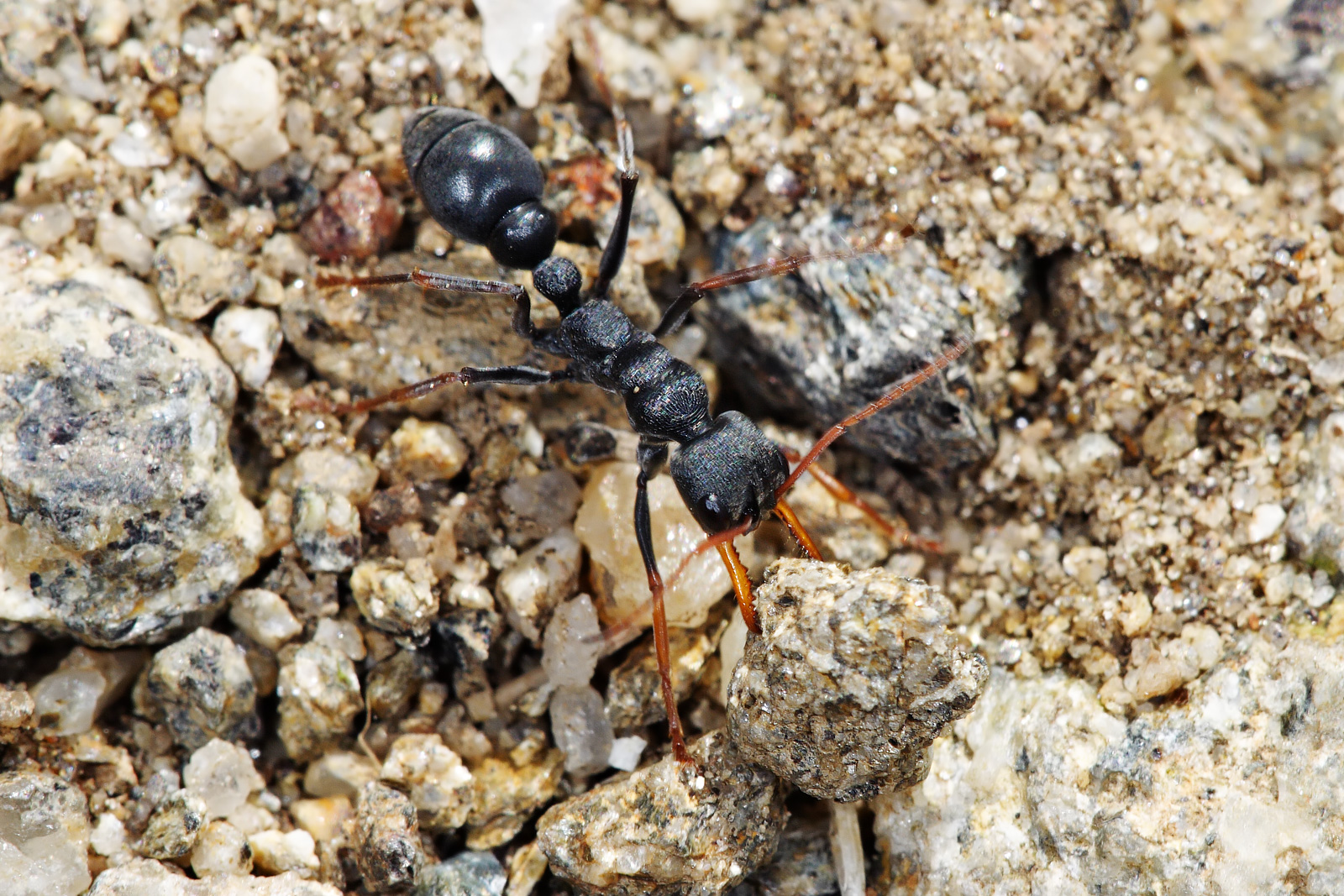
![fir0002 flagstaffotos [at] gmail.com Canon 20D + Sigma 150mm f/2.8](https://commons.wikimedia.org/wiki/File:Jumping_jack_dragging_pebble.jpg)
- Color: Black, orange mandibles
- Worker size: 12-14 millimetres
- Colony size: few hundred
- Queen: 14-16 millimetres, semi-claustral, gamergates
Introduction
This species of ants is also a type of Bull ant. They’re black, with yellowish mandibles. They use sand to help them spin cocoons. Jack Jumper ant workers are about 12-14 mm in length, while queens are usually 14-16 mm long. The Jack Jumper ants are gamergates, which means that they could mate with drones, though there is still a queen. Rove Beetles thrive and their nests and lay eggs in their nests.
Unique Traits
I Spy...
They can follow trespassers up to 1 metre away! This species of ants does not use scent as their main strategy of hunting. They use sight. Their incredible vision is their key to success. They move their head around quickly so that they can quickly focus on their prey and jump. Once they land on their prey, they inject venom into their bodies (sometimes repeatedly) to subdue them. They are even known to kill bees and wasps!
Defences
Bull ants have an incredibly sharp vision. These ants also have a very painful sting, but they can also jump! They can jump up to several centimetres! They are very large ants, with long mandibles, too. They curl up on enemies to sting multiple times. They have a smooth stinger, so they are able to sting again and again.
Habitat & Diet
Jack Jumper ants love to nest in woodlands, bushland, and dry open forests, which are surrounded by sand-filled soil or gravel. They also drink nectar. These ants build homes with gravel and sand, and their structures could be as high as half a metre. This species covers their nest with vegetation to camouflage it. They usually hunt alone, jumping onto prey to kill. They sometimes also stalk their prey for a short distance. These ants are known to enthusiastically jump on flies when they land on the ground. They eat sap-sucking insects and their honeydew. These ants are native to Australia and Tasmania.
Sources:
- https://www.youtube.com/watch?v=5RYANAqYGX8
- https://www.youtube.com/watch?v=1weZJqEalN8&t=104s
- https://bie.ala.org.au/species/https://biodiversity.org.au/afd/taxa/dbcabfc4-6be2-4819-91d9-3a4ee417b063
- https://www.sciencedirect.com/topics/agricultural-and-biological-sciences/myrmecia-pilosula
- https://antmaps.org/?mode=species&species=Myrmecia.pilosula
- http://australian-ants.info/Website/Myrmecia_Eng..html#:~:text=The%20newly%20mated%20queens%20of,soil%20or%20sand%20for%20camouflage:
- https://link.springer.com/article/10.1007/s00040-021-00831-7#:~:text=Attributes%20influencing%20a%20colony's%20social,2013).