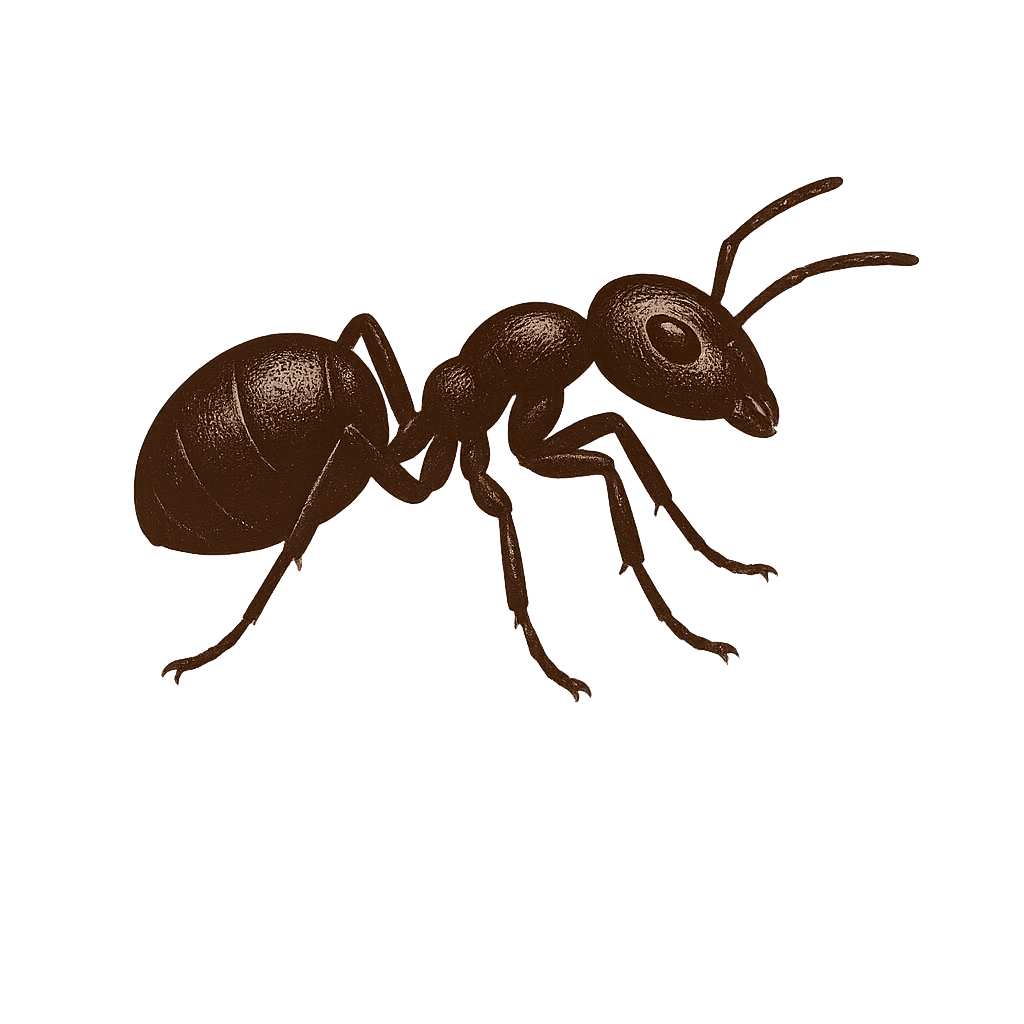
Jerdon's Jumping Ant
Harpegnathos Saltator
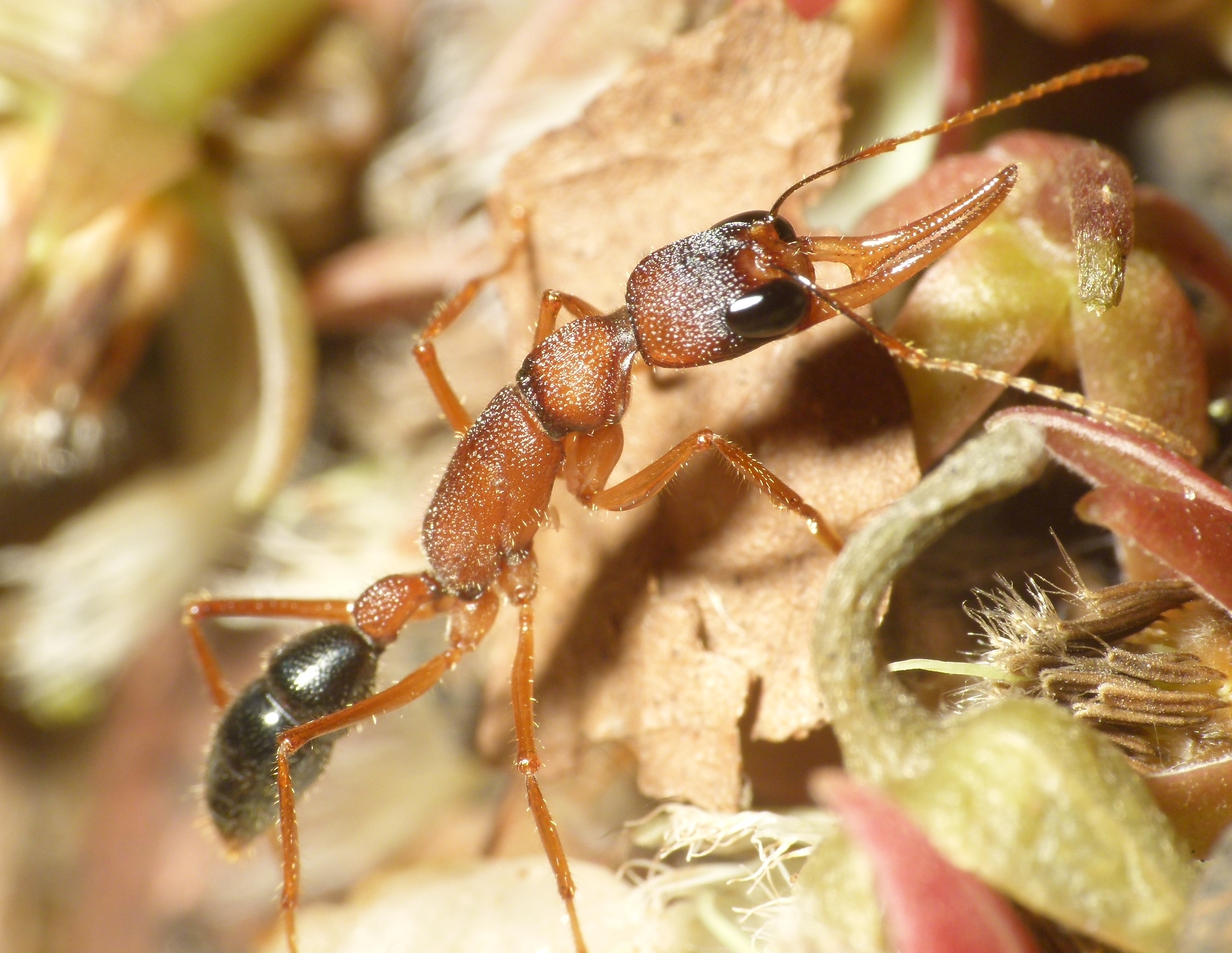

- Color: Reddish-brown
- Worker size: 14-20 millimetres
- Colony size: 100
- Queen: no queen, gamergates
Introduction
Jerdon’s Jumping Ant is a pretty unique ant species that lives up to their name. These ants are also known as “Indian Jumping Ants”. They are reddish-brown, with long mandibles. They also have big eyes. They are 14-20 mm long, and their size is very similar to that of the queen’s. These jumping ants produce cocoons when they are still developing. However, they don’t waste the already-made cocoons. When the ant hatches, the cocoons are used to line the walls of the nest. This is understood as a function to keep the nest drier. These ants are gamergates. There isn’t much difference between the appearance of the workers and the queen. They prefer to nest in deciduous forests.
Unique Traits
Leaping Enthusiasts
Jerdon’s Jumping Ants can “leap” up to 10 cm! They do this for a variety of reasons, including escaping danger and catching prey. They do this by releasing stored energy in their legs. They also have hind legs larger than most, which contributes to their jumping capabilities.
Defences
Jerdon’s Jumping Ants can jump to avoid danger. They use a venom that can paralyze prey as well. This venom is known to cause localized pain that dissipates in an hour (for humans).
Habitat & Diet
These ants thrive in India, hence their nickname “Indian Jumping Ants”. These ants eat small insects. They hunt only during the day and hunt alone. They ambush their prey by hunting through the leaf litter. The ant then jumps on their prey. They use their jaws and stingers to kill them, then bring them back into their nest. Usually, only older workers forage for food.
Sources:
- https://www.jungledragon.com/specie/1894/jerdons_jumping_ant.html#:~:text=''Harpegnathos%20saltator''%2C,not%20consist%20of%20many%20individuals.
- https://www.antwiki.org/wiki/Harpegnathos_saltator#:~:text=Biology-,Nesting%20Habits,See%20Nests.
- https://www.youtube.com/watch?v=zimoeX1zelA&t=324s
- https://www.sciencedirect.com/science/article/abs/pii/S0022191012002387#:~:text=and%20is%20known%20to%20cause,high%20levels%20of%20active%20phospholipase.
- https://www.thewildmartin.com/ant-ecology/harpegnathos-jumping-ants-care-guide-and-ecology#:~:text=FORAGING,in%20the%20higher%20ant%20species.
- https://kapturepest.com/biggest-ant-in-the-world/#:~:text=H.,defense%20or%20when%20navigating%20obstacles.&text=Behavior-,H.,of%20ant%20biology%20and%20behavior.
- https://ucanr.edu/blog/bug-squad/article/jumping-jehosaphat#:~:text=If%20you're%20accustomed%20to,://www.alexanderwild.com.
- https://www.slideshare.net/slideshow/jerdons-jumping-ant-in-karnala-bugs-r-all-pg-1314/46679861