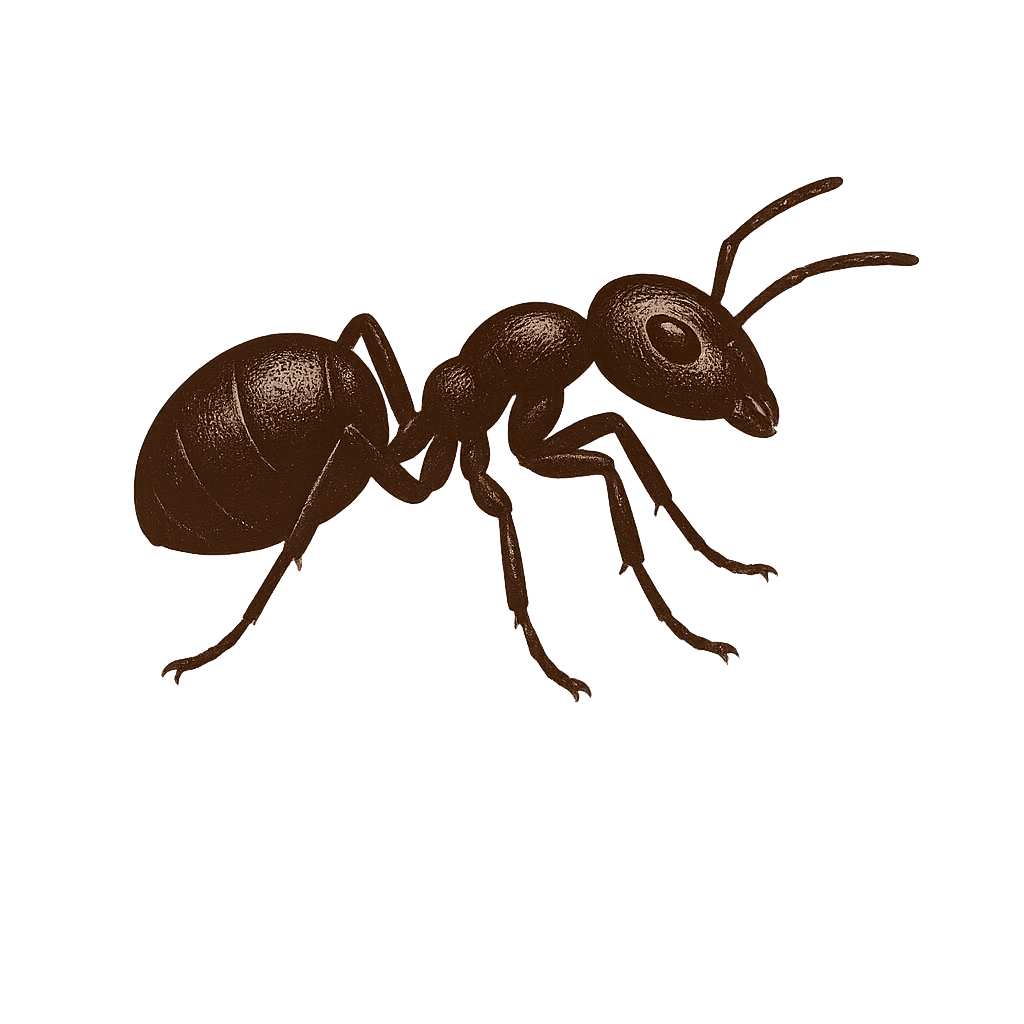
Little Black Ant
Monomorium Carbonarium
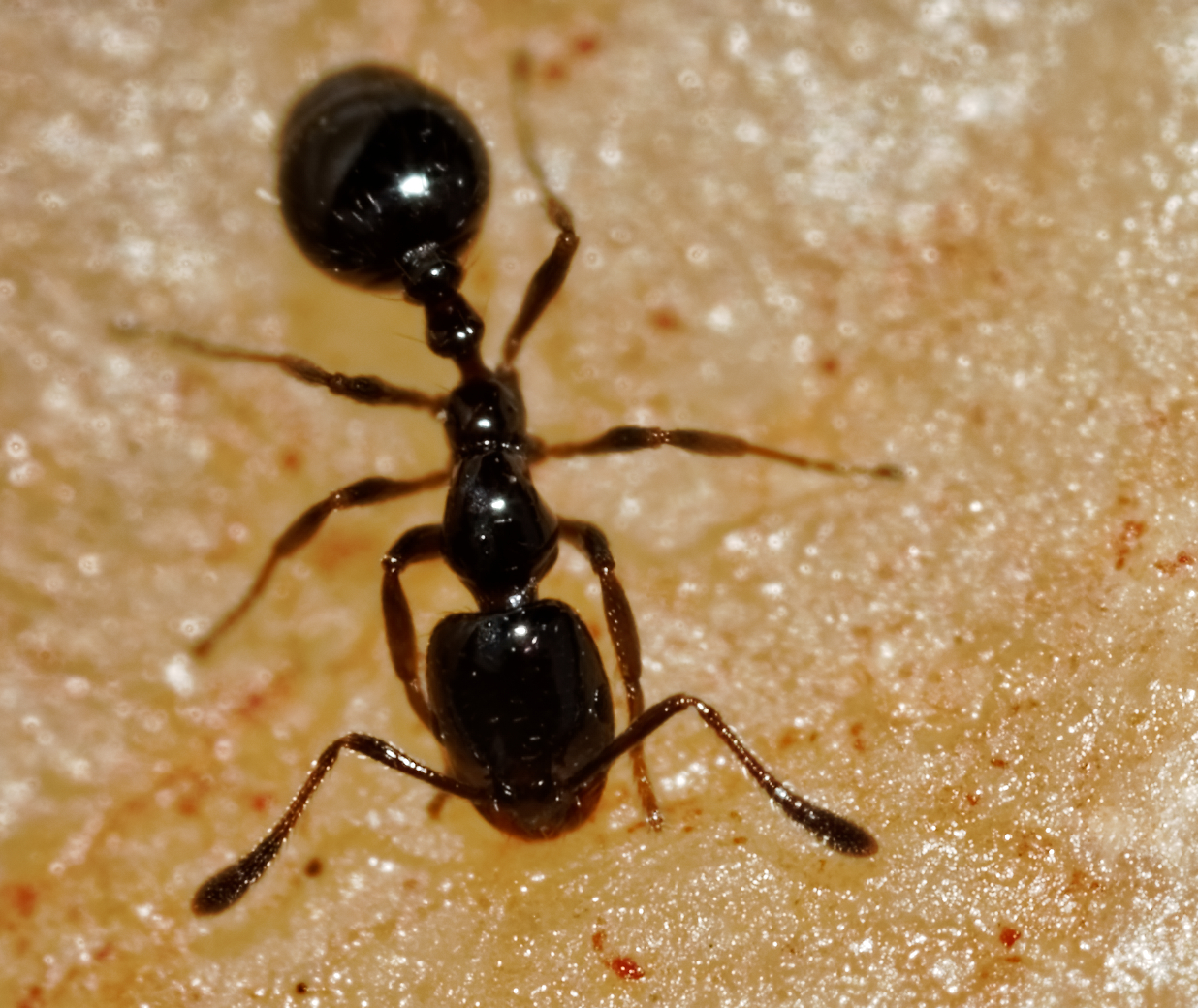

- Color: Black
- Worker size: 1 millimetre
- Colony size: several thousand
- Queen: 4 millimetres, claustral, polygynous
Introduction
Little black ants are a common species in Canada and many other places. They are extremely tiny, and not something you would see often unless you were paying close attention. They are about the size of electric ants, at around 1 mm for workers and 4 mm for queens.
Unique Traits
Indistinguishable Ants with Complex Monarchies
Little black ants are completely black and also very small. No surprise there. They might be mistaken for pavement ants. In order to know the difference, look at their size and color. Pavement ants are larger and might be slightly brown. They are polygynous, to an extent. The founding queens can cooperate if there are no workers but when there are, they may fight or get killed by the workers depending on many factors like the home colony they are from. In some cases, the queens can tolerate each other and so will the workers, but that is unlikely.
Defences
Little black ants bite and sting, but not very effectively. The biting and stinging may cause minor irritation to humans but no more. They can swarm their enemies very effectively, however. This is because of the fast reproduction rate, and the speed at which little black ant eggs become workers. To be exact, the time it takes for an egg to become an adult is at most one month. Carpenter ants, another ant species with cocoons in their developmental stage, take 2 months. The end result is a strong and successful colony with a reliable defense option.
Habitat & Diet
The little black ant is a native species to all states in the US except for Oregon, Washington, and Vermont. It is also found in the Canadian provinces of British Colombia, Alberta, Saskatchewan, Ontario, and Quebec. There are no records of the little black ant anywhere else except for a few countries in Africa and Asia which needs verification. The little black ant is omnivorous, and eats a variety of foods ranging from insects and nectar, to seeds and meats. The ants following the pheromone trail may appear slow.
Sources:
- https://alabamawildlife.org/wonders-of-wildlife-little-black-ant/
- https://antmaps.org/?mode=species&species=Monomorium.minimum
- https://ant-pests.extension.org/little-black-ant/