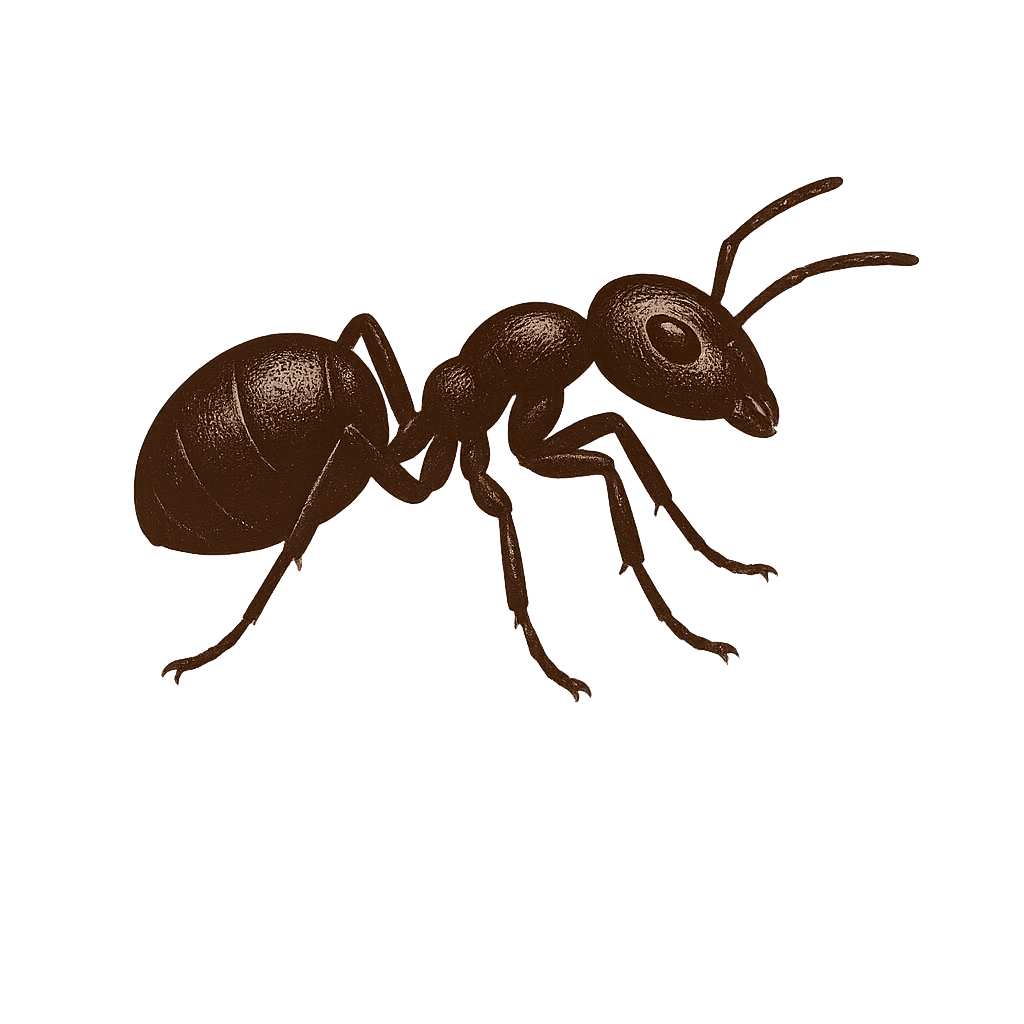
Rover Ant
Brachymyrmex Patagonicus
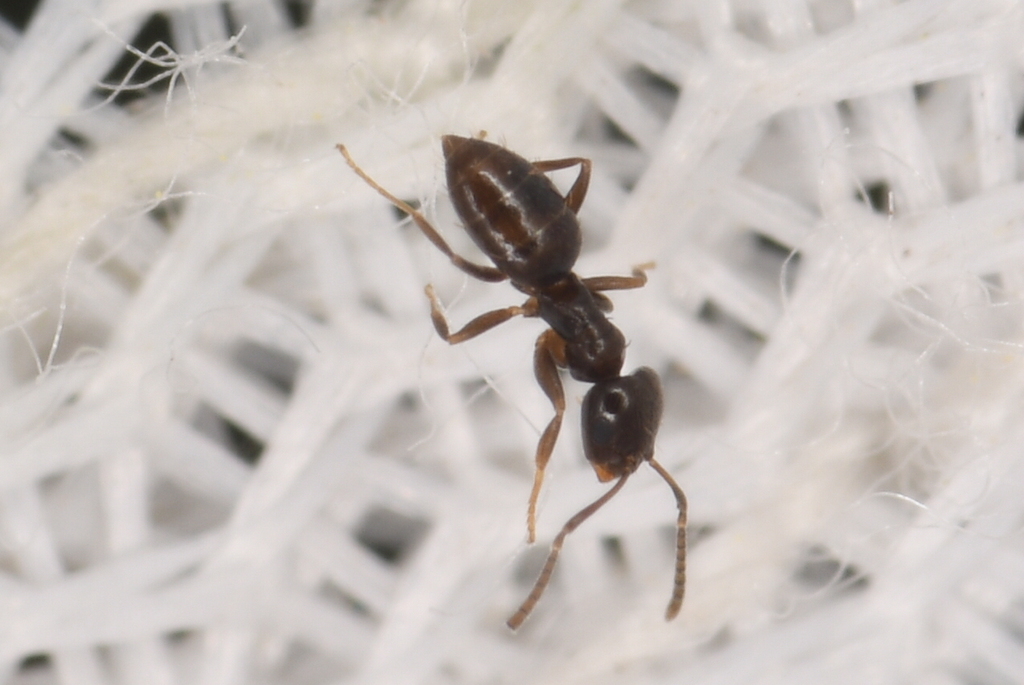
- Color: Dark-brown to pale yellow
- Worker size: 2-4 millimetres
- Colony size: hundreds to a few thousands
- Queen: 3 millimetres, claustral, monogyne
Introduction
Dark Rover Ants are quite an interesting ant to learn more about! Rover Ants are about 2 - 4 mm long. They nest in mulch, soil, leaf litter, and potted plants. Rover Ants are mostly dark-brown or pale yellow in coloration. Their queens are 3 mm long.
Unique Traits
Inbreeding Nobilities
Rover Ants, queens, and drones mate with other members of the nest or the supercolony. This makes Rover Ants genetically similar. The good news is, they have ways to counteract this. Solutions such as queens and drones can mate with others in the same supercolony. This increases biodiversity but also keeps evolution going. This also means they would share the same genetic sequences with other members of the supercolony.
Defences
Rover Ants also have a special chemical defence, but not in the way you might think. They don’t spray formic acid, but rub it all over themselves. This is said to protect them from attacks, such as stings. The formic acid would neutralize fire ant stings.
Habitat & Diet
Rover Ants are native to South America. They feed on honeydew, nectar, insects, and other sugary substances. They often go very far from the nest to forage for food.
Sources:
- https://maggiesfarmproducts.com/blogs/bug-help/get-rid-of-rover-ants#:~:text=Where%20Do%20You%20Find%20Rover,inside%20through%20cracks%20and%20gaps.
- https://www.antsdavey.co.uk/product-page/brachymyrmex-patagonicus-rover-ants#:~:text=Description:%20Brachymyrmex%20patagonicus%20are%20commonly,foods%20does%20not%20go%20unnoticed.
- https://ant-pests.extension.org/the-dark-rover-ant-and-other-rover-ants/#:~:text=Dark%20rover%20ants%20are%20often,good%20control%20in%20their%20study.
- https://www.bigtimepestcontrol.com/learning-center/rover-ants#:~:text=What%20do%20rover%20ants%20look,eyes%2C%20and%20distinct%20humped%20thoraxes.
- https://www.antsrus.com/product-page/brachymyrmex-patagonicus#:~:text=Brachymyrmex%20patgonicus%20are%20also%20known,for%20a%20source%20of%20nectar.