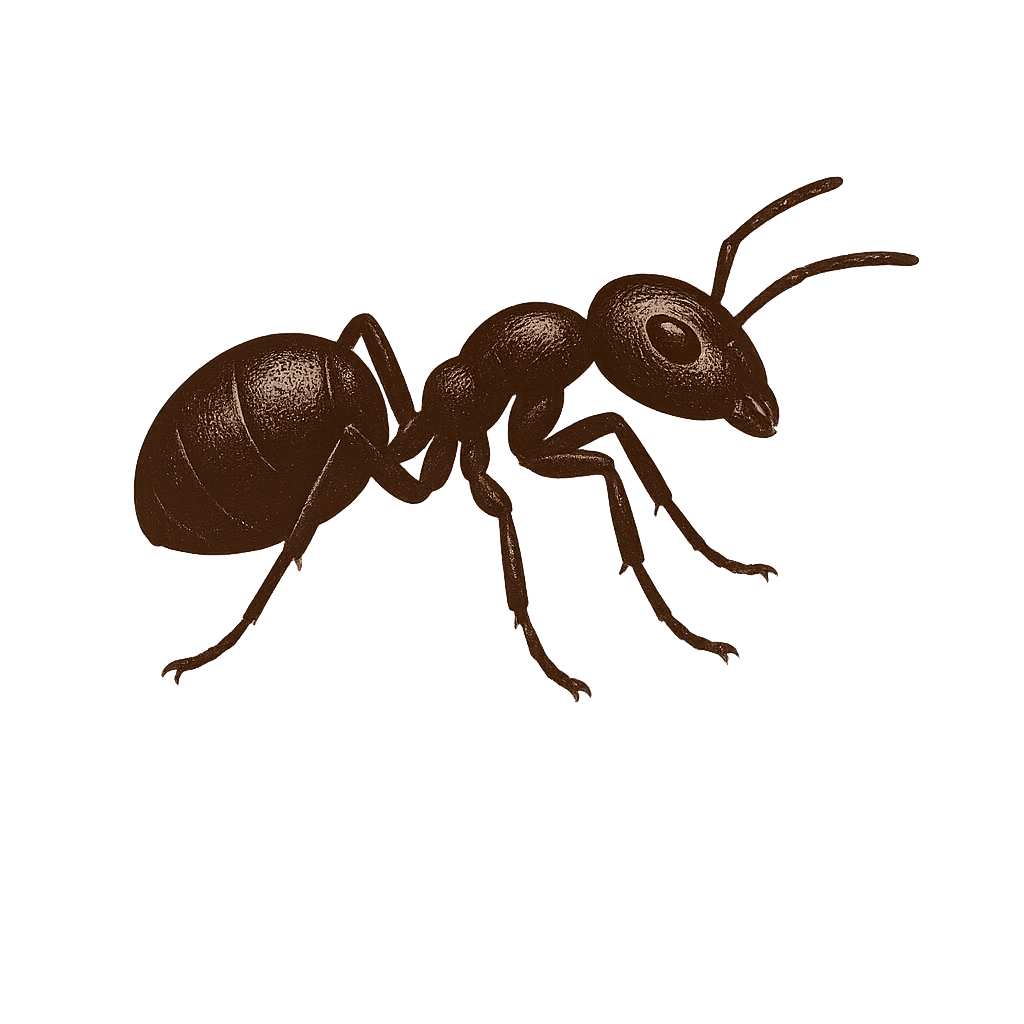
Singapore Ant
Trichomyrmex destructor (or Monomorium destructor)
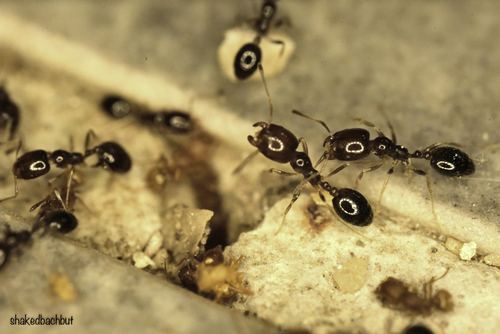
- Color: Light-brown w/ dark abdomen
- Worker size: 1.8-3.5 millimetres
- Colony size: thousands
- Queen: 4 millimetres, budding, polydomous
Introduction
Singapore Ants are known for their ability to destroy, hence their scientific name Trichomyrmex destructor (destructor in Latin means “destroyer”). Singapore Ants are 1.8 - 3.5 mm long. They are light brown with a dark abdomen. Singapore Ants nest in both buildings and outdoors. They have a worker/soldier caste comprising minor, mediae, and major workers. They also have “lesser majors” which is very interesting. Singapore Ant queens are around 4 mm long.
Unique Traits
Mini Demolition Companies
These ants are like demolition companies, but they don’t wait for you to invite them - they welcome themselves into the building and start chewing things down. They can sneak into rooms unnoticed and inflict painful bites on humans and pets while they are sleeping. They can chew their way through many materials, but they like to chew through insulation on electrical and communication cables the most. This is why they can start fires in homes and cause significant damage.
Defences
They have very painful bites. They also have a worker caste comprised of minor, mediae, lesser major, and major workers. These insects also attack humans and are known to bite humans when they sleep.
Habitat & Diet
These ants are native to Asia and North Africa. They have a broad diet including insects and their eggs, and excretions from sap-sucking insects. They are slow to find food compared to some other ant species, but they would eat almost anything they can find, including your dinner. These ants will try to find carbohydrates, proteins, and lipids, but they especially like protein sources. They will tend to sap-sucking insects, too. They forage for food in both indoor and outdoor environments.
Sources:
- https://www.cabidigitallibrary.org/doi/full/10.1079/cabicompendium.34581#:~:text=are%20also%20available.-,Habitat,2005).
- https://professionalpestmanager.com/pest-control-ants/in-focus-small-brown-ants-inside-buildings/#:~:text=Two%20of%20its%20other%20common,parked%20overnight%20in%20infested%20areas.
- https://termitesandants.blogspot.com/2012/04/monomorium-destructor.html#:~:text=Monomorium%20destructor%20has%20been%20updated,her%20first%20brood%20of%20workers
- https://greenpesty.com.au/common-pests/ants/singapore-ants/#:~:text=These%20ants%20are%20notorious%20for,them%20particularly%20challenging%20to%20control.
- https://lifg.australian.museum/Group.html?groupId=yKo2tR2n