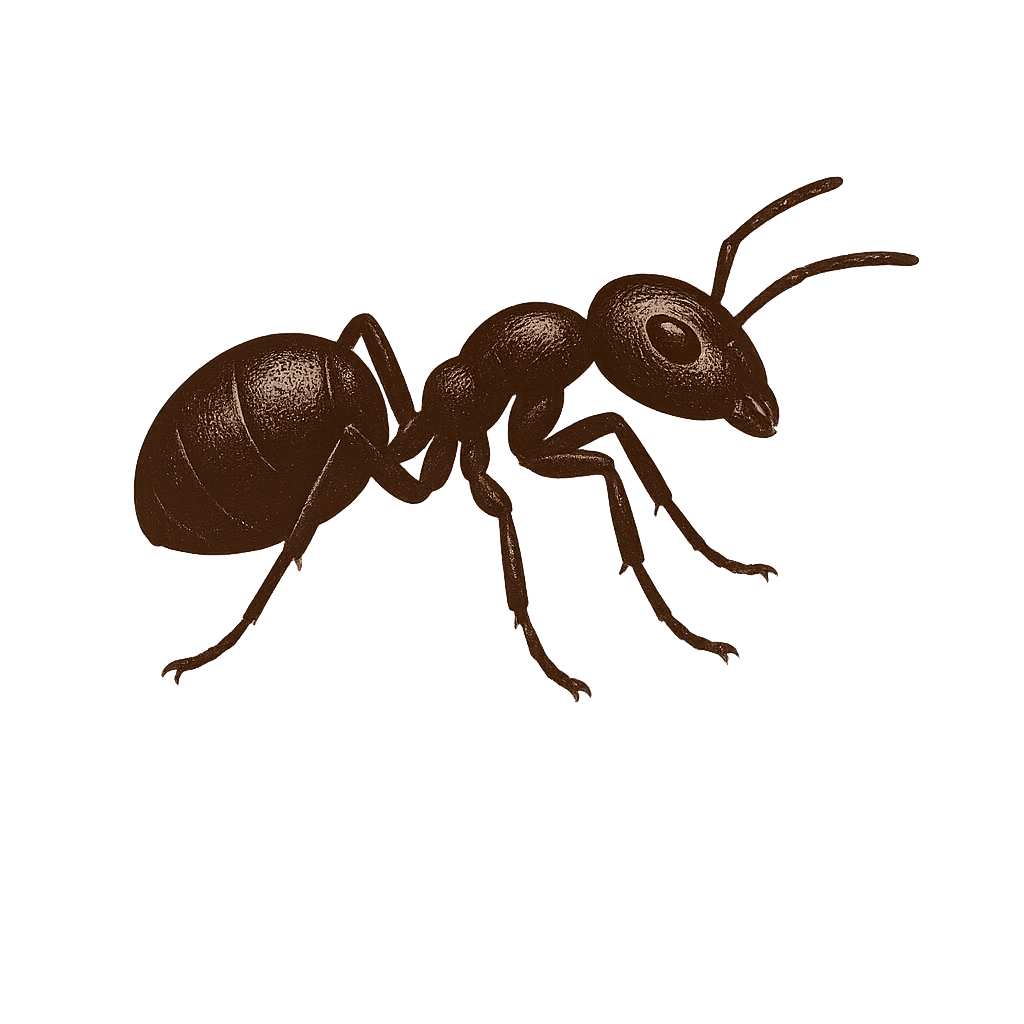
Slender Twig Ant
Pseudomyrmex Gracilis
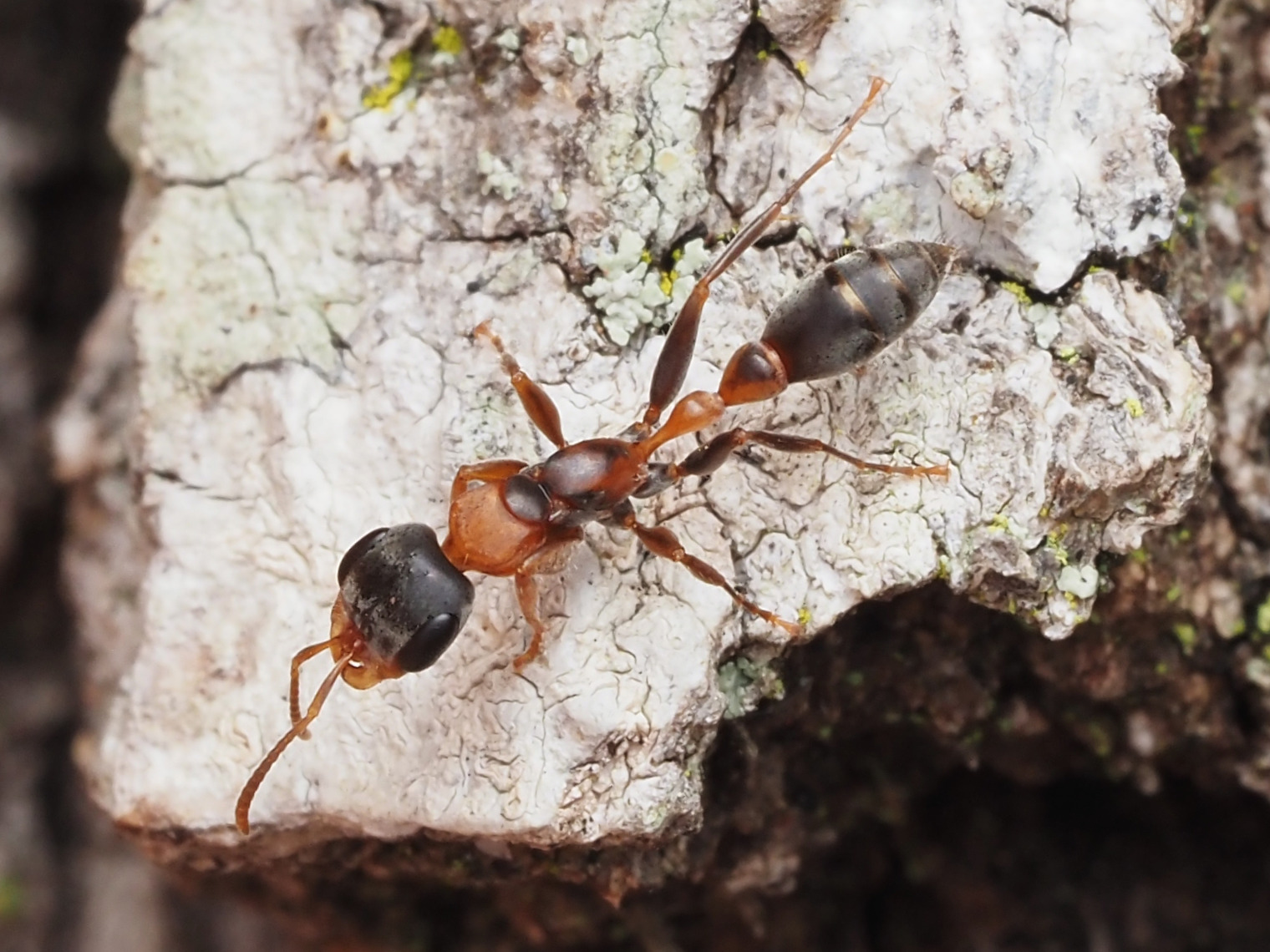

- Color: Black, with orange thorax
- Worker size: 8-10 millimetres
- Colony size: few hundred
- Queen: 11-13 millimetres, semi-claustral, monogyne
Introduction
Slender Twig Ants are a very interesting ant species to explore. They are 8-10 cm in size and usually have dark heads and abdomens, with dark-orange thoraxes. These ants also kinda look like wasps. Their queens are 11-13 millimetres long and are similar in appearance to the workers. This species is also monomorphic. Their natural habitats include fields, mangroves, and rainforests. They like to nest in hollowed out twigs with opening(s). They may also nest in twigs hollowed out by beetles.
Unique Traits
House made of Twigs
Slender Twig ants are likely to be found inside hollowed out twigs, small branches, or even large plant stalks! These ants evolved to be so slender, that they could fit in twigs and plant stalks and use that as their home! They also nest in cavities in twigs already created by other insects, such as beetles. Even though these ants are already very specialized compared to other ants, these ants are actually pretty generalist compared to their cousins, the Acacia Ant (Pseudomyrmex ferruginea). These ants only nest in Acacia Trees! However, there are also other ants that choose to nest in plants that are not in the genus Pseudomyrmex. For example, Camponotus mirabilis are a species of Bamboo ant that specifically nest in one type of bamboo! Other species include Oecophylla smaragdina, which wrap leaves into a ball that makes up their nest.
Defences
These ants incorporate a wide variety of defences, from stinging to swarming, these ants can pack a punch to any predator or prey. First of all, their stings are already a deterrent for any predator wanting a snack, but it’s really the swarming that makes many ants powerful (except Paraponera clavata, because, arguably, their stings do more damage than swarming). They swarm onto enemies and attack aggressively, which is further empowered by their painful stings.
Habitat & Diet
These ants are omnivores, as they hunt insects such as mealworms, but also love a little nectar from flowers. They hunt a variety of insects, as well as drink nectar from a variety of flowers. They are also solitary hunters. They also like aphids and honeydew.
Sources:
- https://floridawildlifegardentails.wordpress.com/2020/02/26/ant-supermodels-in-the-garden/#:~:text=They%20do%20hunt%20and%20feed,Share%20this:
- https://ask.ifas.ufl.edu/publication/IN752
- https://www.fourmishome.fr/Pseudomyrmex-gracilis-bbaaaaaVa.asp
- https://www.orkin.com/pests/ants/elongate-mexican-twig-ants
- https://extension.msstate.edu/newsletters/bugs-eye-view/2023/pallid-twig-ant-vol-9-no-19#:~:text=Pallid%20twig%20ants%20normally%20nest,multiple%20nest%20sites%20per%20colony.