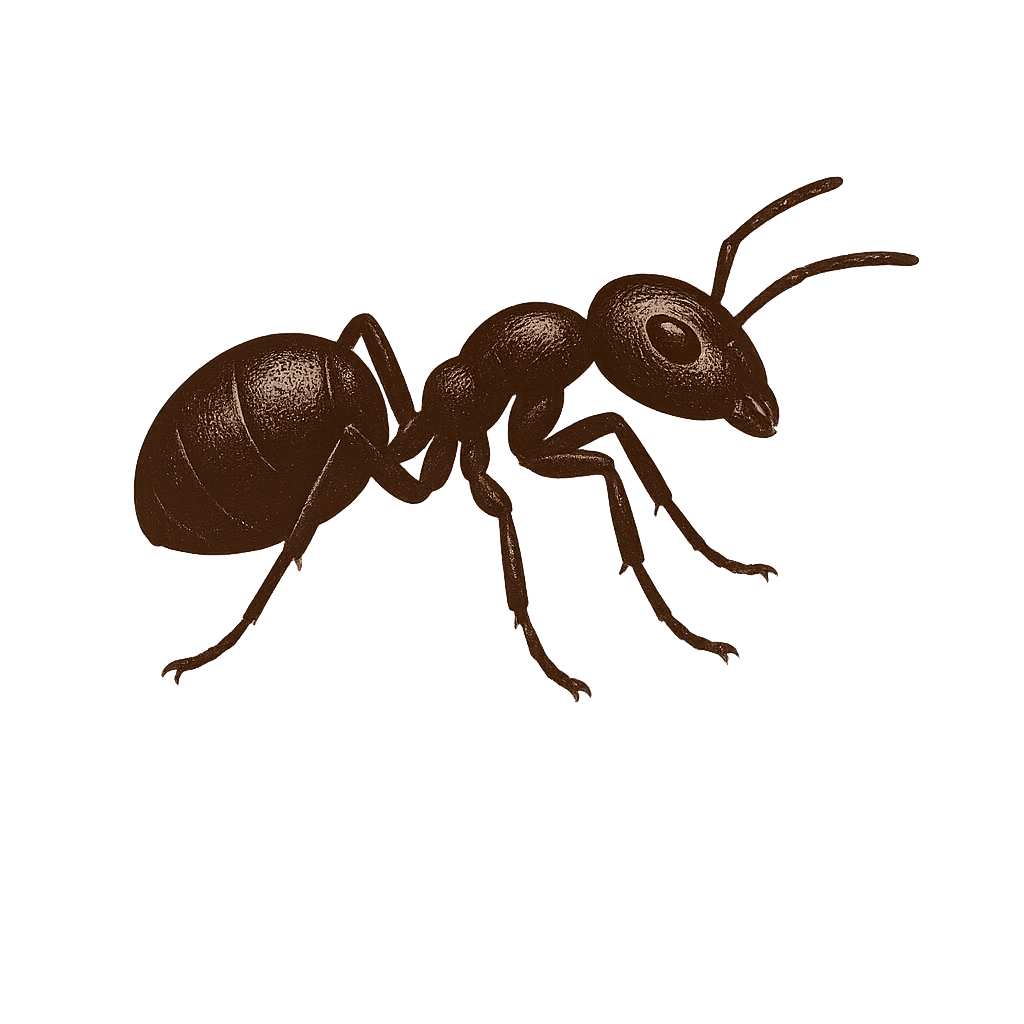
Golden-Tailed Spiny Ant
Polyrachis Ammon
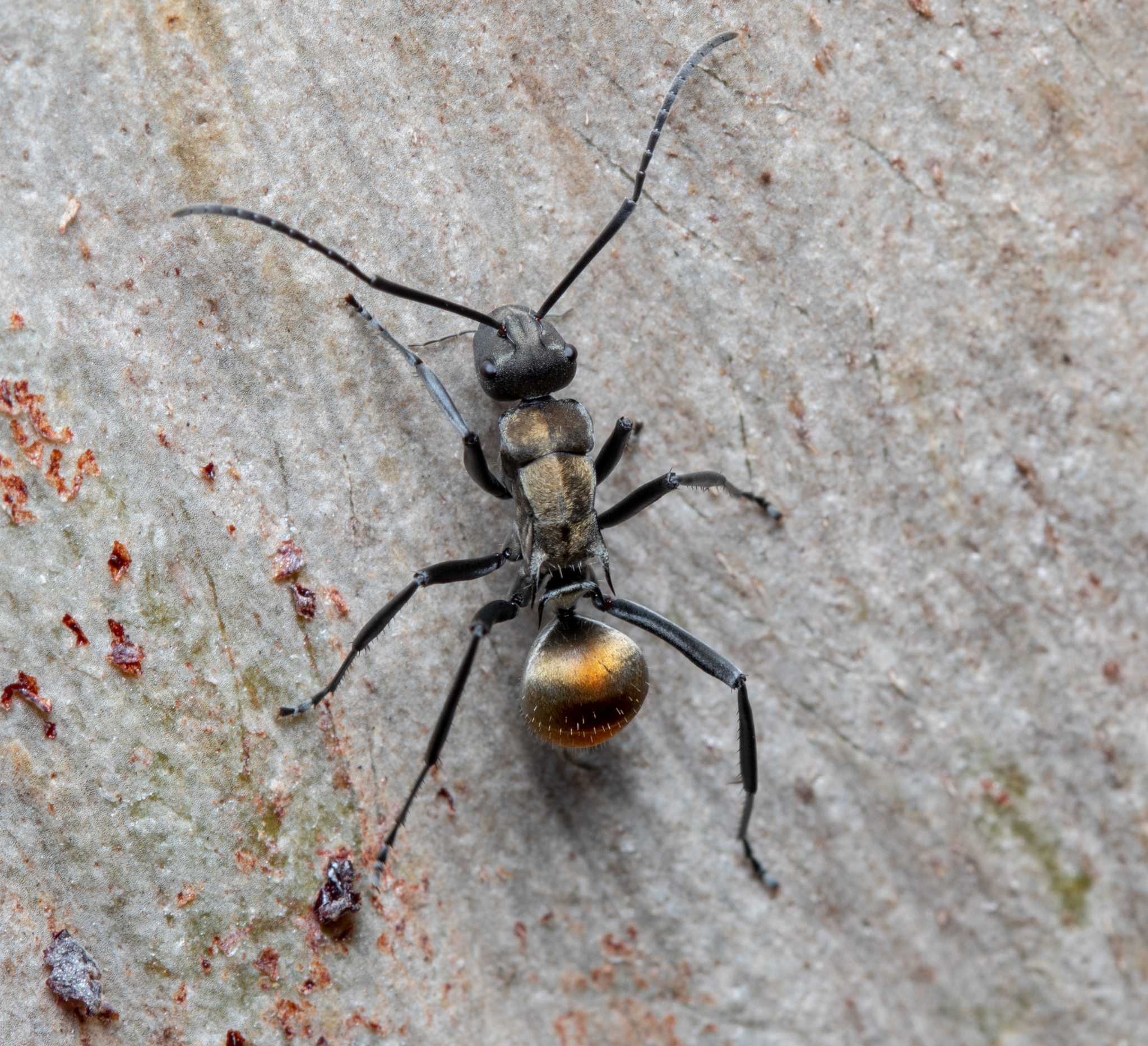

- Color: Black, with shiny golden hairs on abdomen
- Worker size: 6-8 millimetres
- Colony size: 400
- Queen: 1.2-1.4 centimetres, fully claustral, monogyne
Introduction
Sea urchins, porcupines, and hedgehogs, what do they all have in common? They are all covered in spines. Well then, add these incredible spiny ants to the list! These ants nest in sand located near the base of trees. They are around 6-8 mm long. The workers are brown or black, with a metallic appearance, which is why this particular species is called the “Golden Tailed Spiny ant”. Their queens are 1.2-1.4 cm large. They tend to nest under trees, shrubs, and under rocks.
Unique Traits
Tanks
Golden-tailed spiny have an ingenious defensive technique: Spines on their thorax. When these ants sense danger, they curl upwards to display their spines. Their spines are key anti-predatory defence, and could even help them with competitiveness and a variety of helpful traits!
Defences
These ants, as we discussed earlier, have key spines on their exoskeleton that help them repel predators, like jumping spiders. Furthermore, they have an acidopore, so they can actually shoot acid as well!
Habitat & Diet
Golden-tailed spiny ants are native to eastern Australia. They primarily inhabit eucalyptus forests, woodlands, and urban environments. They have a symbiotic relationship with leafhoppers, which they care for, in exchange for honeydew. They love honey water, as well as sources of protein like flies, mosquitoes, or mealworms. They also consume seeds.
Sources:
- https://pictureinsect.com/wiki/Polyrhachis_ammon.html#:~:text=Adult%20Size%20of%20Golden%2Dtailed,Attract%20Golden%2Dtailed%20spiny%20ant
- https://en.s-tillandsia.com/product-page/polyrhachis-ammon-golden-tailed-spiny-ant-%E5%A5%B3%E7%8E%8B%E3%82%A2%E3%83%AA#:~:text=About%20the%20item%20to%20be,health%20and%20without%20any%20defects.
- https://fieldofmar-e.schools.nsw.gov.au/fact-sheets/invertebrates/golden-tailed-spiny-ant-fact-sheet
- https://pmc.ncbi.nlm.nih.gov/articles/PMC7319116/
- https://www.estheticants.com/product-page/polyrachis-ammon#:~:text=These%20ants%20build%20their%20nests,exchange%20for%20protection%20from%20predators.
- https://www.antpark.com.au/polyrachisammon