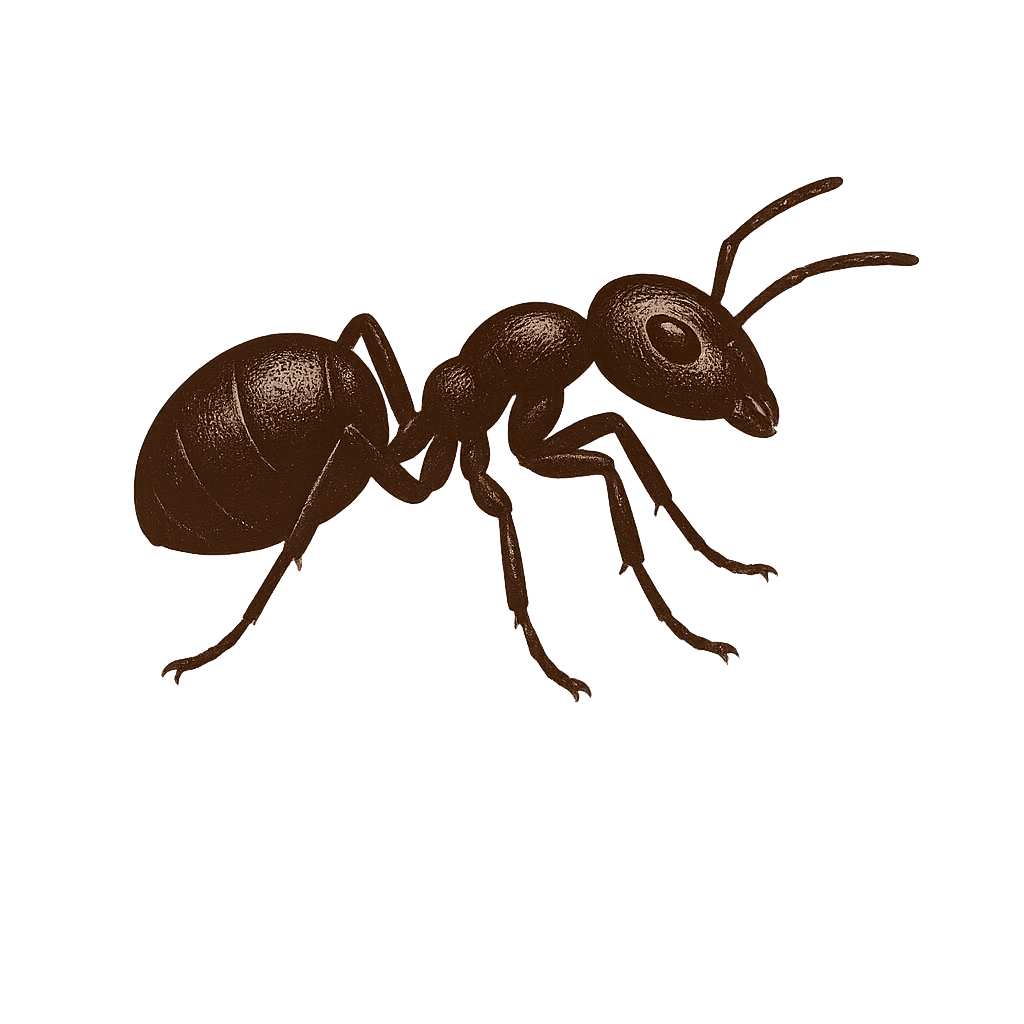
Thief Ant
Solenopsis Molesta
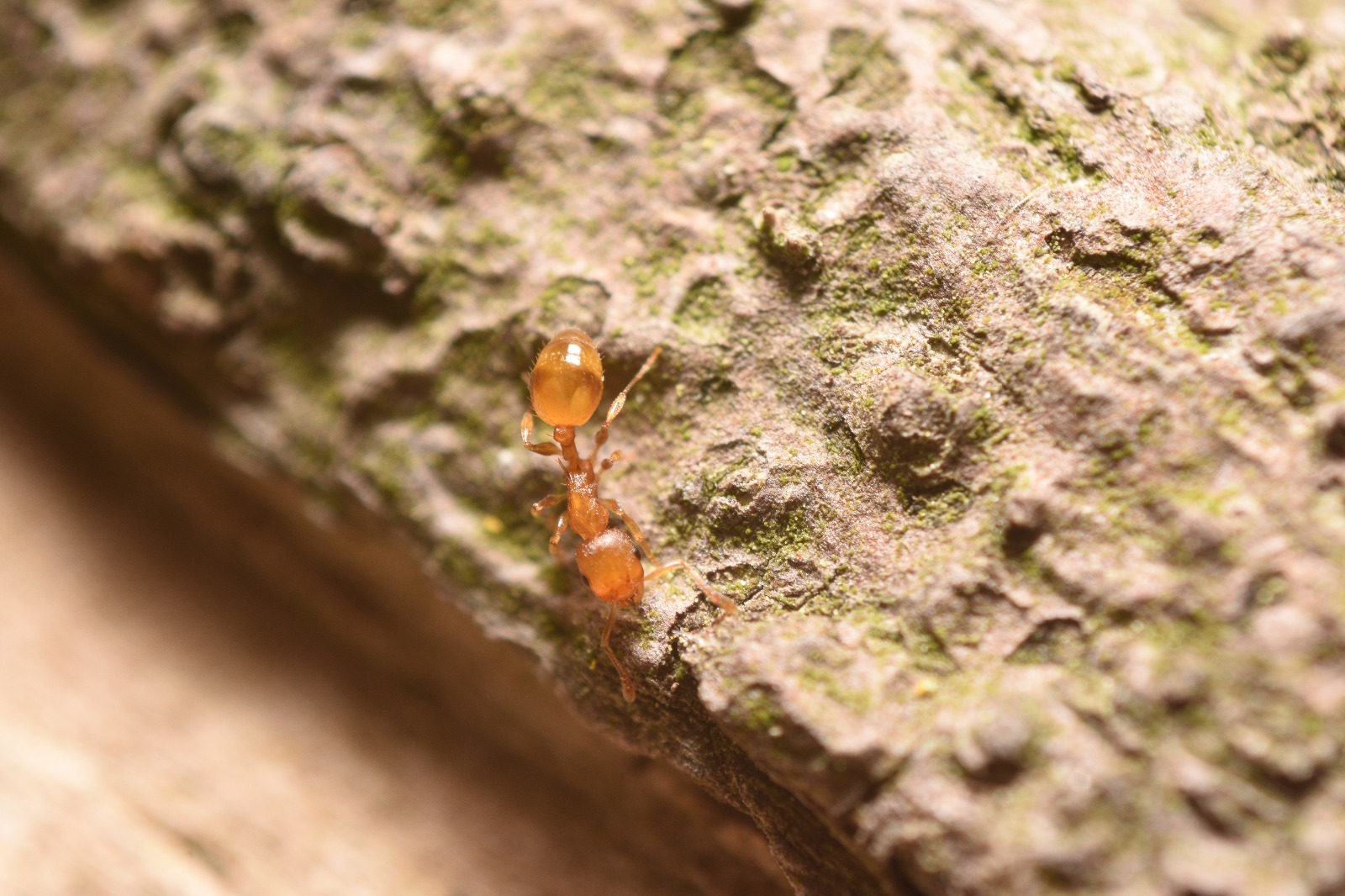

- Color: Yellow, brown-dark brown
- Worker size: 1.5 millimetres
- Colony size: few thousand
- Queen: 4-5 millimetres, (sorry, we have tried very hard but we couldn't find reliable information on queen monogyny/polygyny or claustrality. Also, these ants are very hard to indentify, so that may contribute.)
Introduction
Thief Ants are a pretty sneaky species of ants. They are mostly 1.5 mm long and are yellow, brown, to dark brown. They also appear to be smooth and shiny. These ants have large nests with tiny tunnels to other ant colonies. Indoors, Thief Ants are known to nest in small cracks and crevices, like under floors or in walls. Outside, they will nest in rotting wood, under rocks, and around walkways. Thief ants are monomorphic. Their queens are 4-5 mm long.
Unique Traits
Brood Burglar
Thief Ants are known for stealing from other ant colonies. Thief Ants often nest near another nest so that raids would be more easily done. They create very secretive tunnels to the nest. They raid mainly for brood. The brood is taken back to the nest to be consumed. Thief Ants prefer to raid ant colonies with workers larger than theirs. They raid all year, and sometimes also raid several times a day! They are not considered slave-making ants because they do not raise the brood as their own, but they consume the brood. Sometimes, raids could entirely take over the other colony!
Defences
They use very aggressive biting as a defence. They also defend themselves with a mild sting. This sting isn’t very powerful because their stingers are very delicate.
Habitat & Diet
Thief Ants live in the US, southern Canada, and Northern Mexico. They eat many different fat-rich foods like grease, meats, cheese, and some insects. They also eat foods like brood from other ant colonies, seeds, and dead animals like certain rodents. They raid other colonies for their brood. Brood like larvae and pupae are highly nutritious food choices. They are high in protein and other nutrients. Proteins are highly needed for brood development.
Sources:
- https://mississippientomologicalmuseum.org.msstate.edu/Researchtaxapages/Formicidaepages/genericpages/Solenopsis.molesta.htm
- https://www.canr.msu.edu/resources/thief-ants#:~:text=The%20length%20of%20the%20thief,habitually%20steal%20food%20and%20brood.
- https://antmaps.org/?mode=species&species=Harpegnathos.saltator
- https://extension.psu.edu/thief-ant#:~:text=There%20is%20a%20strong%20preference,and%20commonly%20during%20hot%20weather.
- https://www.bestantsuk.com/post/the-secret-world-of-thief-ants-insights-and-intrigues#:~:text=Thief%20ants%2C%20appropriately%20dubbed%20due,host%20colony%20of%20critical%20resources.
- https://urbanentomology.tamu.edu/urban-pests/ants/thief/#:~:text=Thief%20ants%20are%20extremely%20small,devour%20host%20larvae%20and%20pupae.