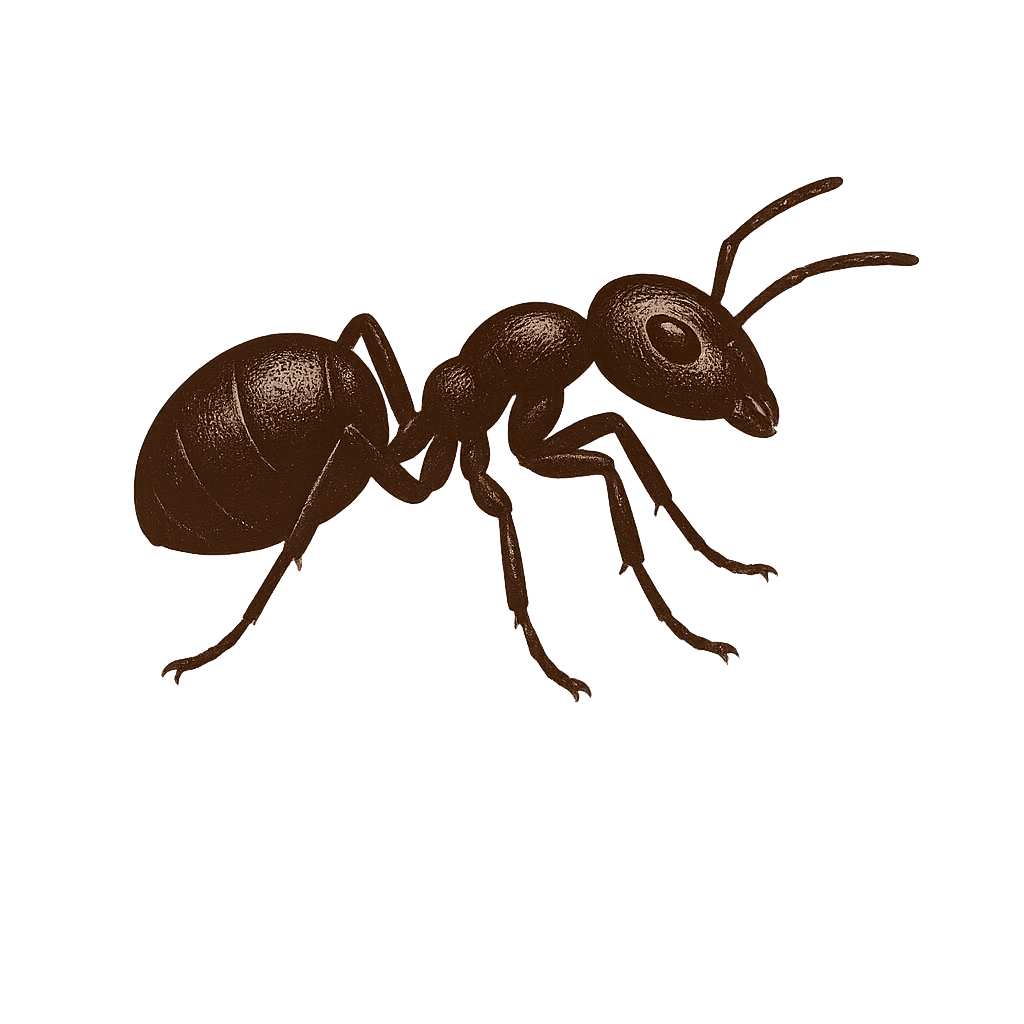
Trap-Jaw Ant
Odontomachus Bauri
- Color: Reddish-brown - black
- Worker size: 1/8 - 1/4 inches
- Colony size: 100,000 - 500,000
- Queen: 6 - 8 millimetres, claustral/parasitic, monogyne
Introduction
Trap-jaw ants are a very unique species of ants that have adapted to their environment in such an interesting way. Trap-jaw ants are 9-11 mm in size. They are usually of a dark or black colour. They nest in soil, leaf litter, under rotting wood, and forest floors. The queen is around 12 mm long.
Unique Traits
Snapping Jaws
One of the most famous features of trap-jaw ants is that they all have very interesting mandibles. Their mandibles are held at 180 degrees and are longer and thinner than many other ant mandibles. These ants have a sort of internal spring that, when triggered, releases the mandibles at an average speed of 90 mph. There are hairs on the trap-jaw ant’s mandibles that are the triggers. When something touches the hairs, the spring is triggered.
Defences
The trap-jaw ant’s mandibles can crush prey. They can also snap their mandibles to escape battle because their mandibles are powerful enough to propel them backward. Trap Jaw Ants also have stingers. It makes humans feel pain just a little bit more than a bee sting. Another unique defence is that trap-jaw ants have larvae with spikes.
Habitat & Diet
These ants live in tropical and subtropical regions around the globe. They mostly eat small insects between 3 - 4 mm in length (like termites), and sometimes sugary things like honeydew. Their mandibles can catch small insects. Trap-jaw ants mainly hunt alone.
Sources:
- https://www.antwiki.org/wiki/Odontomachus_bauri#Description
- https://www.antwiki.org/wiki/Trap-Jaw_Ants
- https://www.livescience.com/59062-trap-jaw-ants-have-hairy-baby-blobs.html
- https://www.youtube.com/watch?v=0Qq1sYphD1M
- https://www.youtube.com/watch?v=H2okI6ZszQY
- https://www.livescience.com/52939-trapjaw-ants-leg-jumps.html
- https://entomologytoday.org/2015/12/01/trap-jaw-ant-jumps-with-its-legs-or-its-mandibles/#:~:text=Photo%20by%20Magdalena%20Sorger.%20Trap%2Djaw%20ants%20have,unseen%20jumping%20behavior%2C%20rather%20than%20its%20jaws.
- https://extension.msstate.edu/newsletters/bug%E2%80%99s-eye-view/2021/trap-jaw-ant-vol-7-no-27#:~:text=Trap%2Djaw%20ants%20nest%20in,and%20can%20be%20used%20repeatedly.
- https://antark.net/ant-species/trap-jaw-ant-odontomachus-sp/#:~:text=Scientific%20names,Queen
- https://www.antstore.net/shop/en/ants/Ants-from-America/Odontomachus-bauri-5253.html